CC Forum London XIV, the Full Report
Every session of the fourteenth CC Forum London, from the House of Lords to the Fem Capital Salon: who spoke, what they argued and where they disagreed.
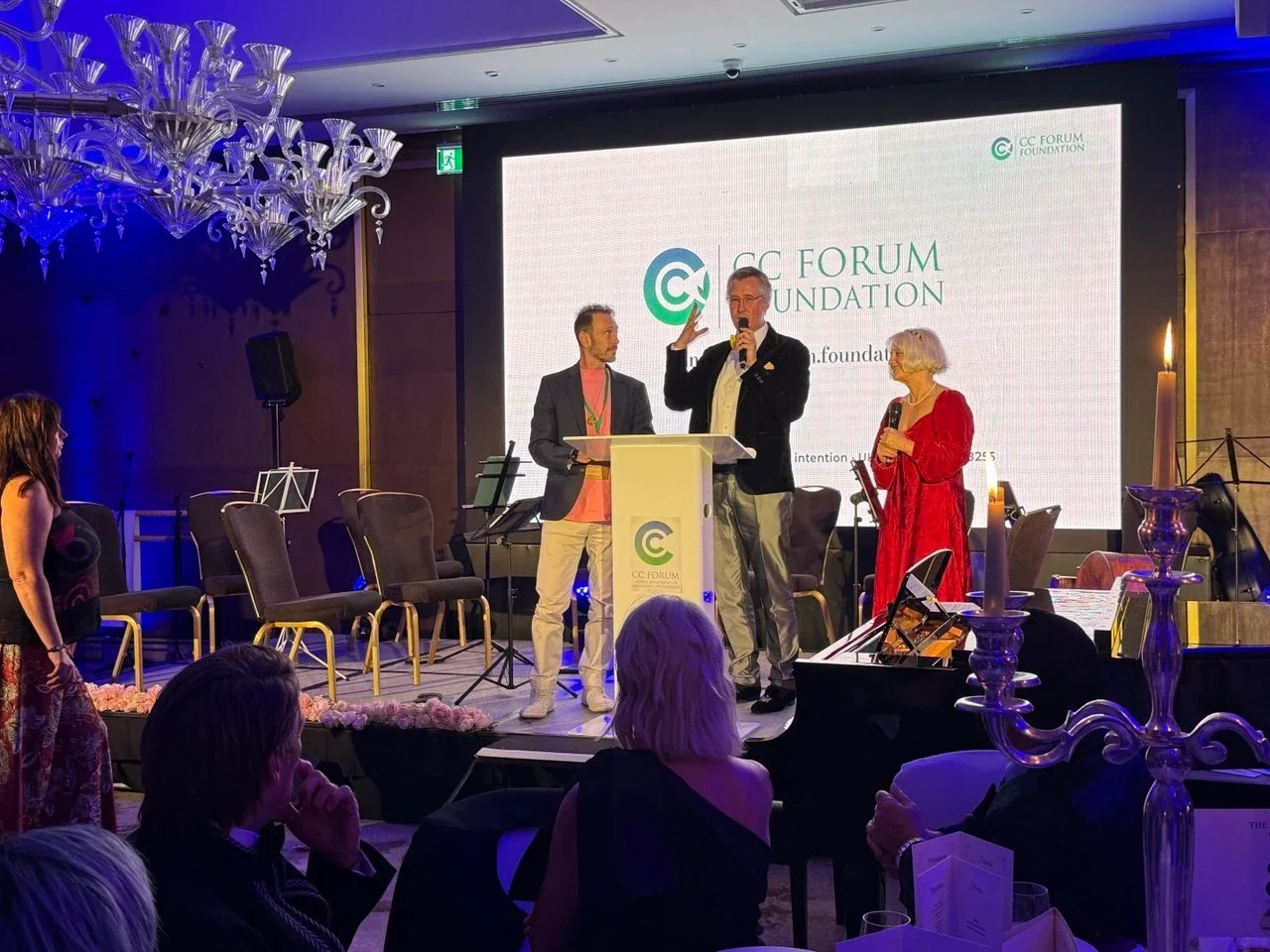
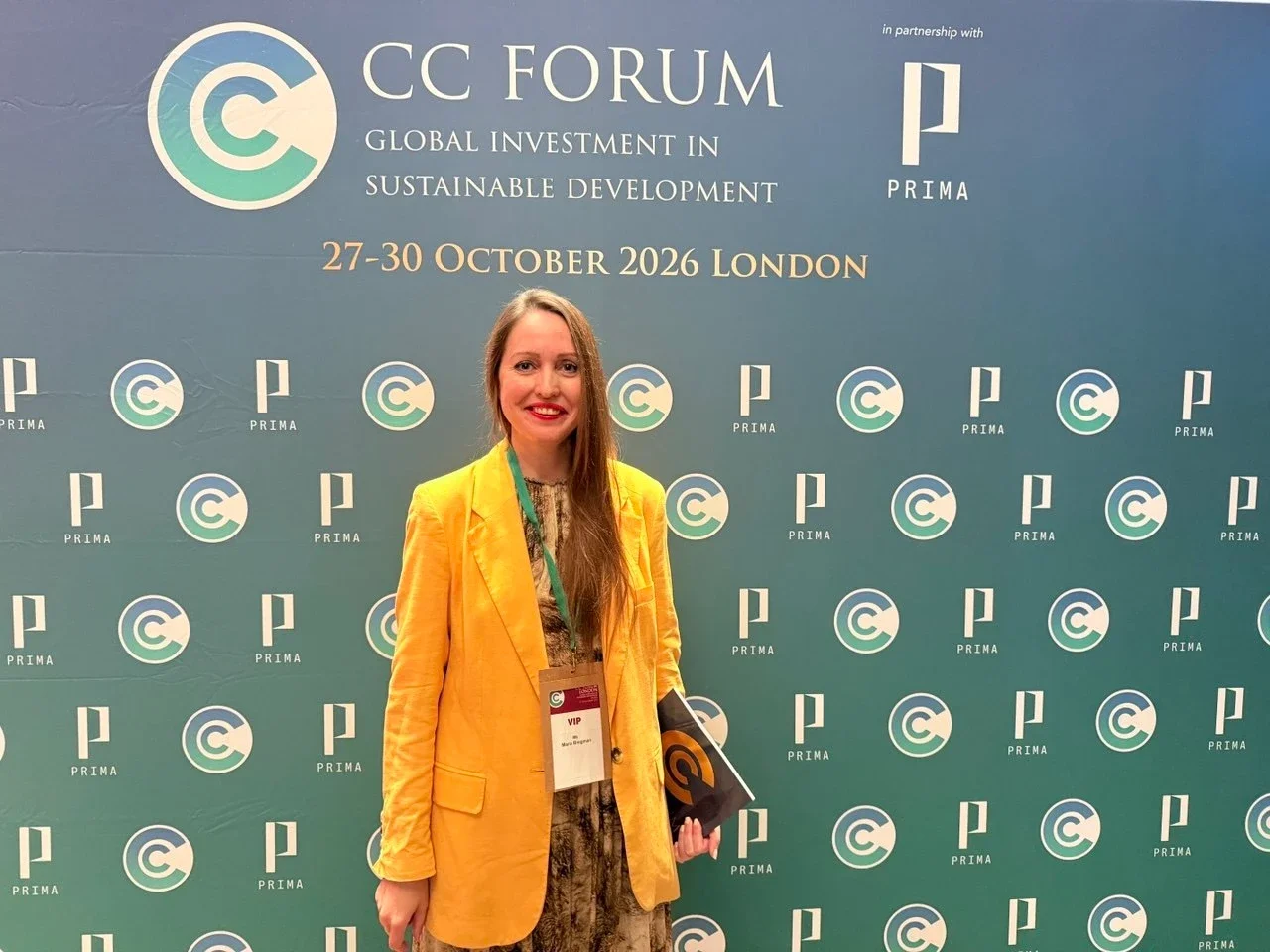
Photo: Maria Bregman / Creativity's UK
This is the complete, session-by-session record of CC Forum London XIV by Maria Bregman, editor-in-chief of Creativity’s UK, which attended as an accredited media partner. Her longread on what the forum showed about private capital and the climate is published by Creativity’s UK.
Twelve days before COP31 opened in Antalya, a moderator at The May Fair Hotel looked out at the room and borrowed a line from T.S. Eliot: "Hurry up please it’s time." It was a fair summary of the fourteenth edition of CC Forum London. Between 8 and 30 October 2026 the forum moved through five venues – a wealth manager’s headquarters in the City, the House of Lords, a Mayfair hotel, a Pall Mall club and a Soho bar. It brought investors, family offices, scientists, a Nobel, a Hilton and a former BlackRock managing director into the same rooms and asked them to agree on where the world’s money should go next. Underneath every panel sat a question the programme never printed: can private wealth do what governments have not, for the climate, for nature and for the poorest?
They did not agree, and that was the most useful part. In March, at the thirteenth edition, the talk was of capital moving away from Washington’s retreat on environmental rules and finding new homes. In October the arguments turned inward, to Britain’s finances and to the investors themselves, and they were sharper. A climate party leader called his own country close to bankrupt. A climate scientist told the room it had hardly talked about climate change at all. An ESG defender compared the framework to a car his teenage son had dented. A Columbia economist told peers and investors that the companies building artificial intelligence warn it could destroy humanity "and we’re going to have the IPO tomorrow".
The forum began three weeks early, on 8 October, with an invitation-only evening at the London headquarters of Rathbones: "Impact Investment and Wealth Management in the Age of AI". The guest list was family offices, wealth managers, founders and investors. The format was a short conference followed by a round table.
The choice of host mattered later. Rathbones reported £120.7 billion of funds under management and administration at the end of June, and its ethical arm, Rathbones Greenbank, reappeared on stage on 29 October. There Jonathan Moon said that the Greenbank share of the business, five to ten per cent, was "reflective of the broader financial industry". The question the pre-event raised – what private wealth does with AI and with impact at the same time – ran through every panel that followed.
An evening at the House of Lords, 27 October
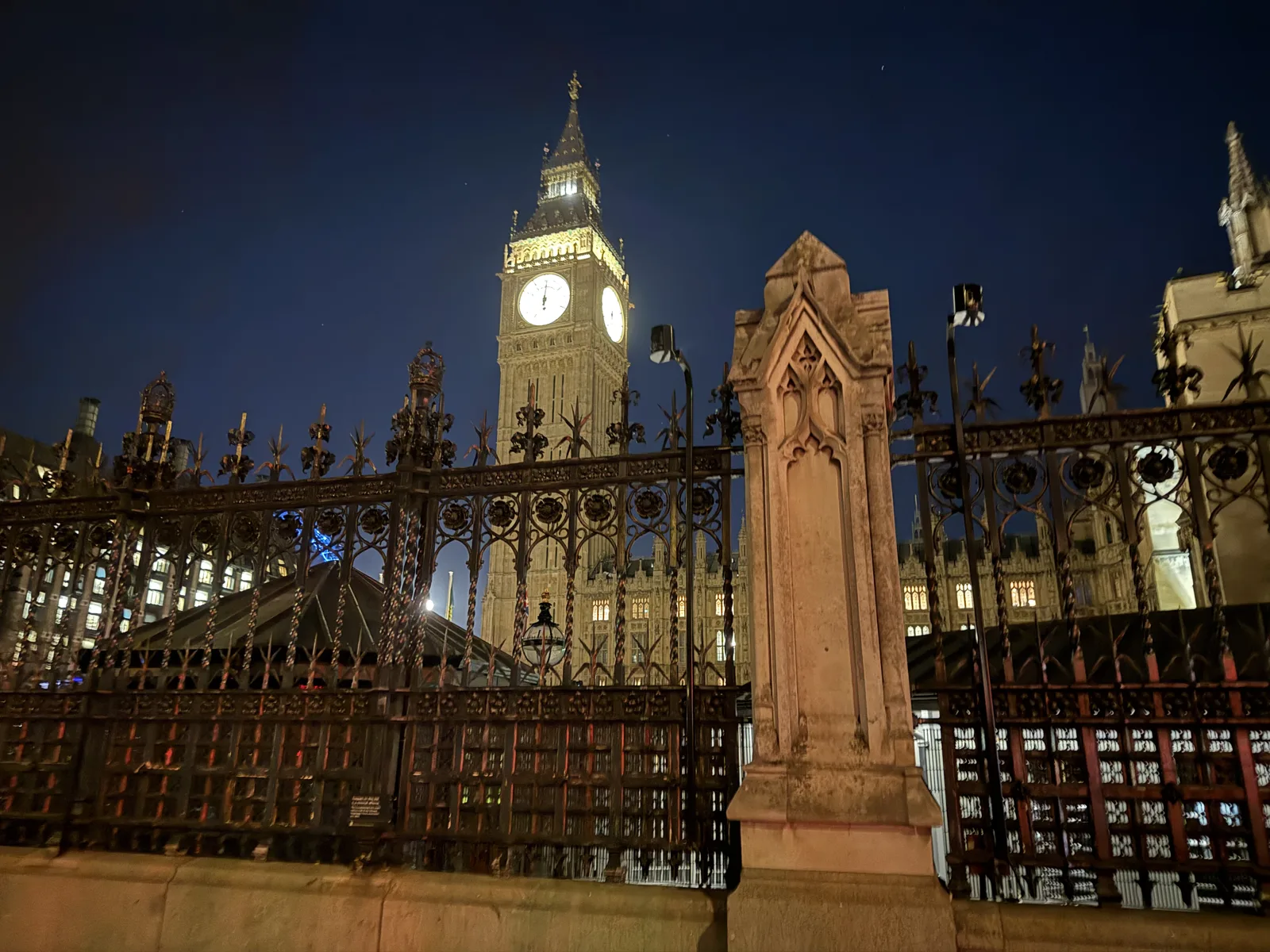
The VIP reception on Tuesday 27 October was hosted by Lord Zac Goldsmith, the former environment minister, in a room the forum’s founder Max Studennikoff introduced as an improvised stage. Goldsmith opened, Ludvig Nobel followed, and Jeffrey Sachs arrived late from a lecture at the London School of Economics. Studennikoff warned the room in advance: "nothing whatever Jeffrey says is short."
Goldsmith asked the room not to separate climate from nature, because doing so leads to "perverse solutions". In the four minutes he planned to speak, he said, the world would lose about 200 football pitches of tropical forest. The Congo Basin, he said, "provides about half of the rainfall for the entire continent of Africa". Losing it at a million hectares a year would mean "a humanitarian disaster on a biblical scale".
His central point was about markets. The energy transition, he argued, has already been decided by the market rather than by politicians: solar is now the cheapest power in any African country, without subsidies. Nothing similar exists for forests. "There is no market for protecting, really, the Amazon or the Congo Basin or the great forests of Indonesia." Aid budgets are being cut and philanthropy, though larger than ever, cannot reach the scale needed. "We’ve got to write the value of nature into the way we do business. And we can wait for governments to do that… Or we can just do it."
His example was Indonesia. Two weeks earlier, he said, the president had cancelled a planned 2.5 million hectares of deforestation in West Papua. The government would instead put investment into restoring degraded land, some 12 million hectares of it. He expected that by the next convening "there will be a flurry of activity" from investors who had seen the opportunity.
After the speech, Studennikoff recalled that Goldsmith had taken three indigenous leaders on a private tour of Parliament during the March edition, which ended with tea in the House of Lords.
Ludvig Nobel, the forum’s master of ceremonies for the week, spoke briefly. He described CC Forum as built on the belief that "innovation, capital, and leadership carry responsibility beyond themselves". Joining it had felt "less like joining a new conversation… more like stepping into one I already believed in". Studennikoff added that registrations for the next day had passed 350.
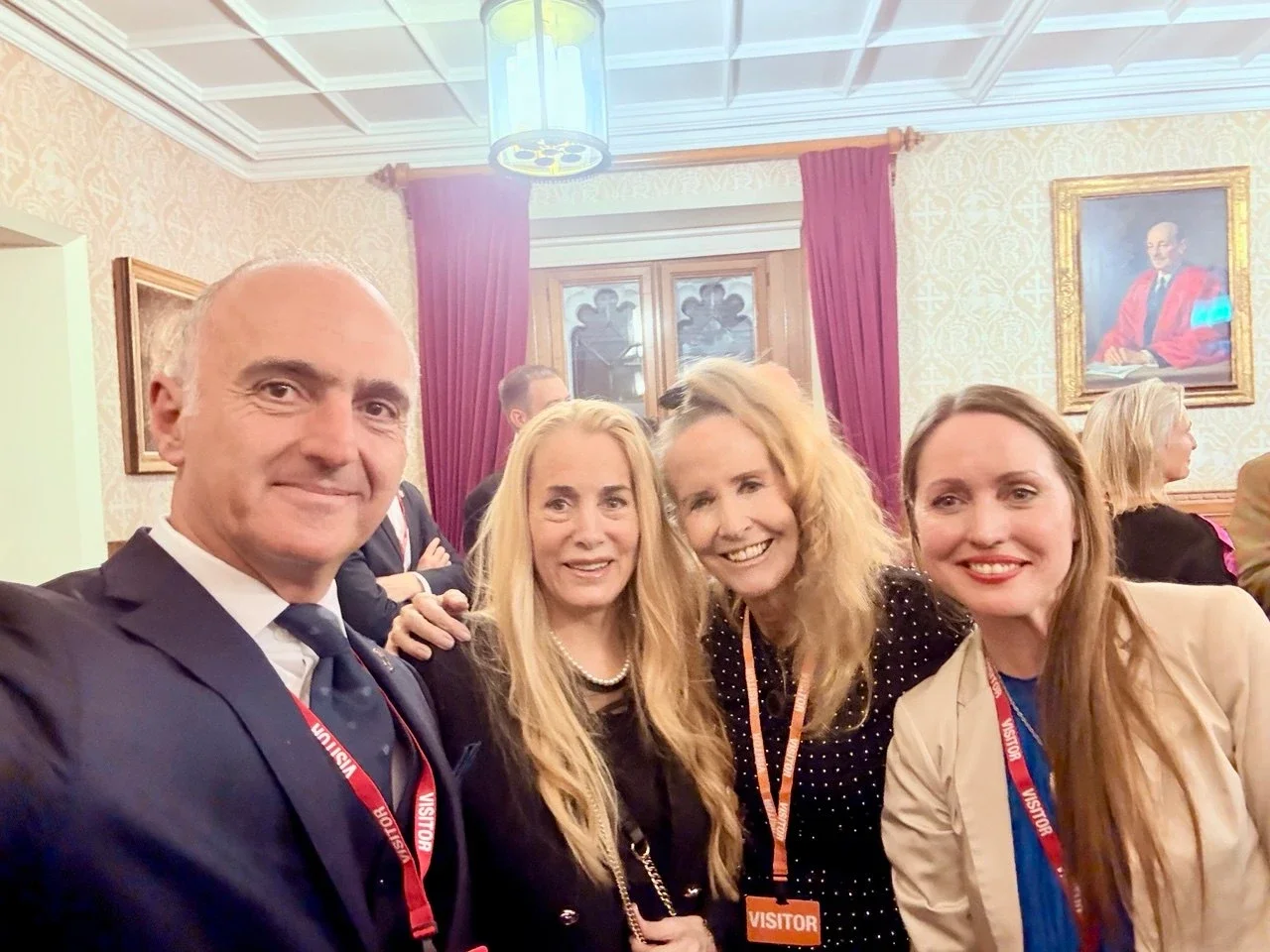
Sachs spoke for more than half an hour. The full video is below and on the Creativity’s UK YouTube channel. His opening thesis was financial, which suited the audience: "A good world has a high rate of return, I can tell you." By his estimate, investing in a child’s education returns around 20 to 22 per cent a year, the best return available anywhere. "No society will succeed if the children are not educated, and no society will fail if the children are educated."
He defined sustainable development as four goals pursued together – prosperity, fairness, environmental sustainability and peace – and called it "not an a la carte menu". He then listed six transformations: education; health, the field in which his wife Sonia, a physician, has spent 25 years working in the poorest places; green energy; agriculture and land; cities; and AI.
On energy he told the story of the Paris Agreement gavel. James Hansen was sitting next to him. "And I said, this is wonderful. And he looked at me and said, this is terrible." Warming, Sachs said, has already reached 1.5°C and is rising about twice as fast as it did between 1970 and 2010. He was careful about where he put the blame: "Nothing’s immoral about coal. Nothing’s immoral about oil… But quantum physics says that the carbon dioxide that they lead to when they’re burned traps heat." That summer he and Sonia had driven BYD electric cars from Rome to Hong Kong, some 15,000 kilometres, without charging problems.
On land he described farmers in Sitapur, Uttar Pradesh, learning to use drones for precise fertilising. He also proposed that Brazil host a global centre for tropical forests.
AI drew his sharpest line of the night. "It’s a weird world where they tell you one day, well… products could destroy humanity, and we’re going to have the IPO tomorrow. If it could destroy humanity, why don’t we take a month to think about that?"
He ended with three conditions: plan ahead, think regionally – "look to your left, look to your right… be nice to them" – and make the UN work. He then read out his email address and offered "free advice".
In questions, Enzo di Taranto asked about American policy. Sachs said China leads the green technology stack "by a wide margin" and that the United States is ten to fifteen years behind: "So the U.S. lost that race. It’s not even a race. They abandoned what they should have done." Asked about a more compassionate AI, he described an experimental model of the UN Security Council loaded with eighty years of its records. He also recommended Magnifica Humanitas, Pope Leo XIV’s first encyclical, published in May and devoted to artificial intelligence.
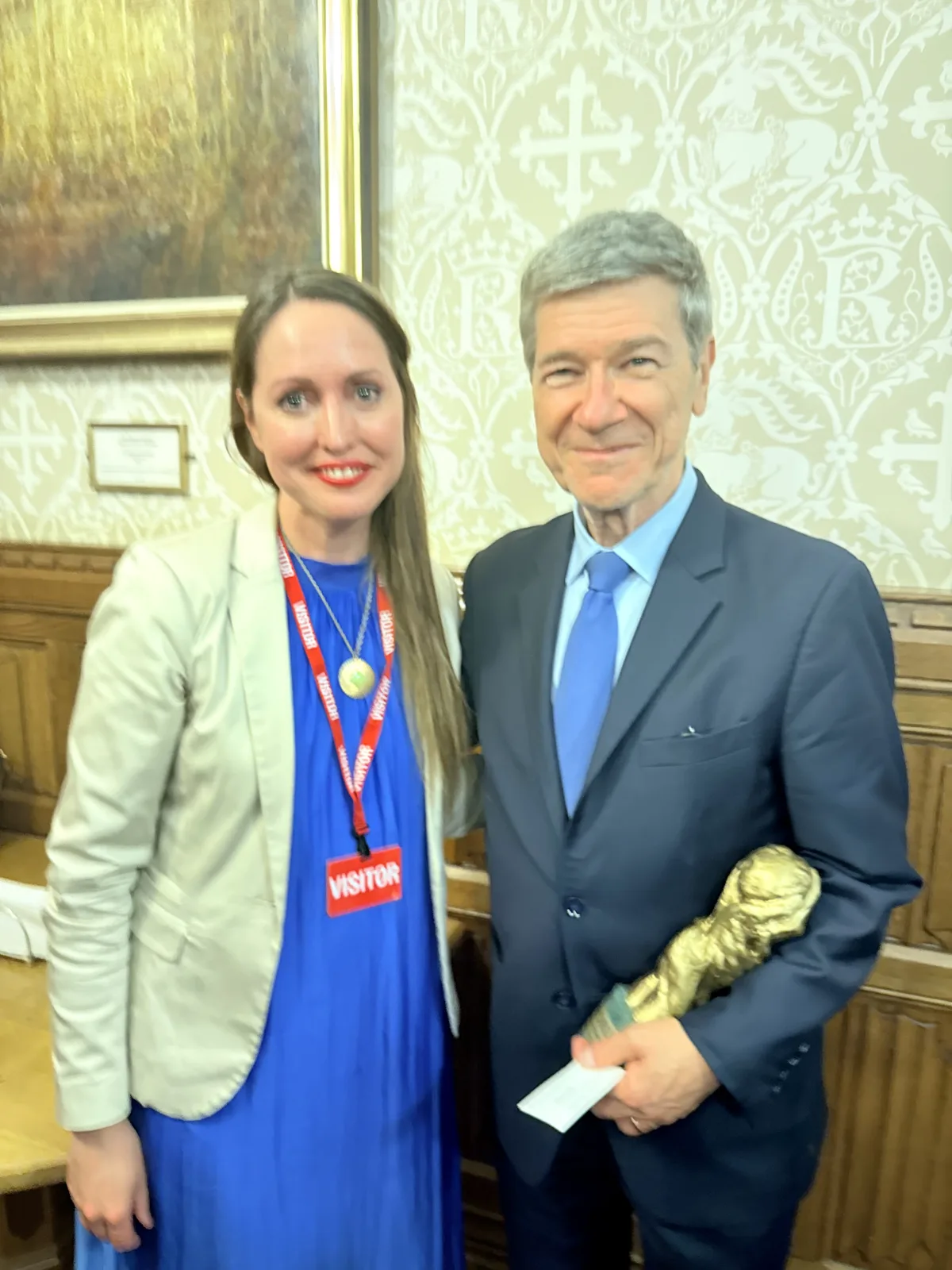
The evening ended with the surprise Studennikoff had promised. Because Sachs would leave London before the Thursday gala, Ludvig Nobel presented him on the spot with the CC Forum Global Investment Prize "for advancing the UN’s SDG goals".
Net zero on trial, 28 October
The main conference opened on Wednesday at The May Fair Hotel, and the first open fight came at 13:15, with a debate on whether Britain should double down on net zero or reassess it. Studennikoff moderated and set one rule: "We are not here to deny climate change… If one of you on this stage or in the room ever cast any slightest doubt on that, please leave the room." He explained why it was personal. That summer, for the first time, the brook feeding the 500-year-old moat at his family’s chateau in France had run dry.
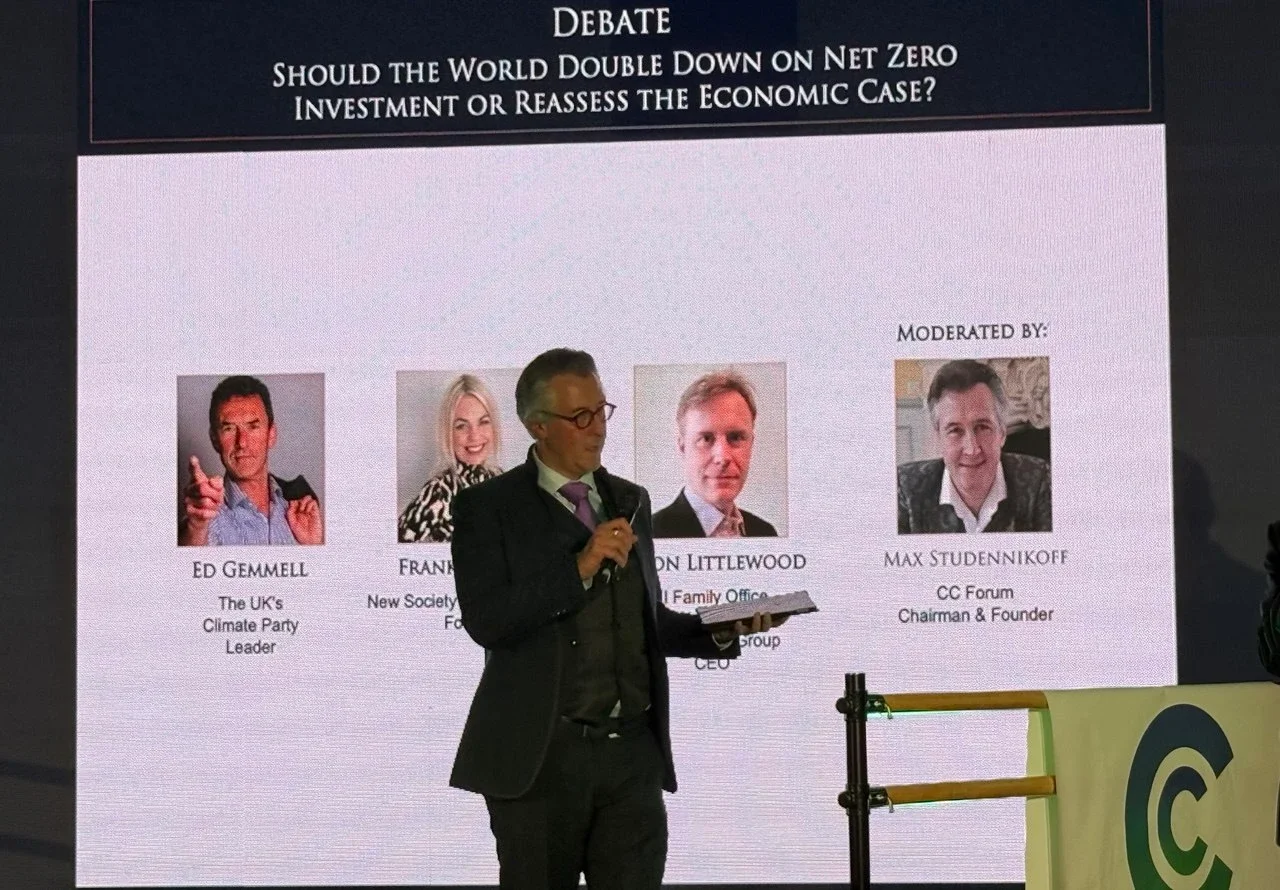
Nigel Farage had been announced as a speaker but was campaigning in Manchester. His place went to a philanthropist named Dominique, who said she had helped de-risk some of the largest blended finance funds in the world.
The case for net zero was not made gently.
Ed Gemmell, leader of the Climate Party, argued there is no time for slow targets: "There isn’t 2050 or 2040. It’s complete suicide." He also made the economic case. In his reading, net zero and AI have been Britain’s fastest-growing sectors, and without net zero industries the economy shrinks. "We are going to be bankrupt in this country very soon. So what do we do?" His answer was a government that offers certainty and de-risks investment, then gets out of the way. Germany, he said, did de-risk solar, "but actually what it is, is they de-risked it for China."
Frankie Oliver, a climate communication strategist, said the debate existed only because of "a mass, million pound, billion pound invested communication strategy" designed to polarise action. Net zero, she said, is "just a scientific equation". Her historical example was central heating: only 5 per cent of British homes had it in 1960, and a coordinated government and industry effort changed that within a generation.
Dominique argued from the other side of the environmental movement. Carbon, she said, is the wrong goal to build a market around: "No one can go to zero. You have to have an abundance goal." She would "triple down", but on a multi-trillion agenda for nature.
Simon Littlewood, who spent two decades financing solar, batteries and wind in China, accepted the science and rejected the policy. "What you’re doing in the UK and Europe is you’re putting regulations which are killing business. Nobody in the right mind invests into this continent." He cited Goldsmith’s speech of the night before: markets, not politicians, will decide. Money, he said, is not the constraint: "every project that we look at gets overfunded".
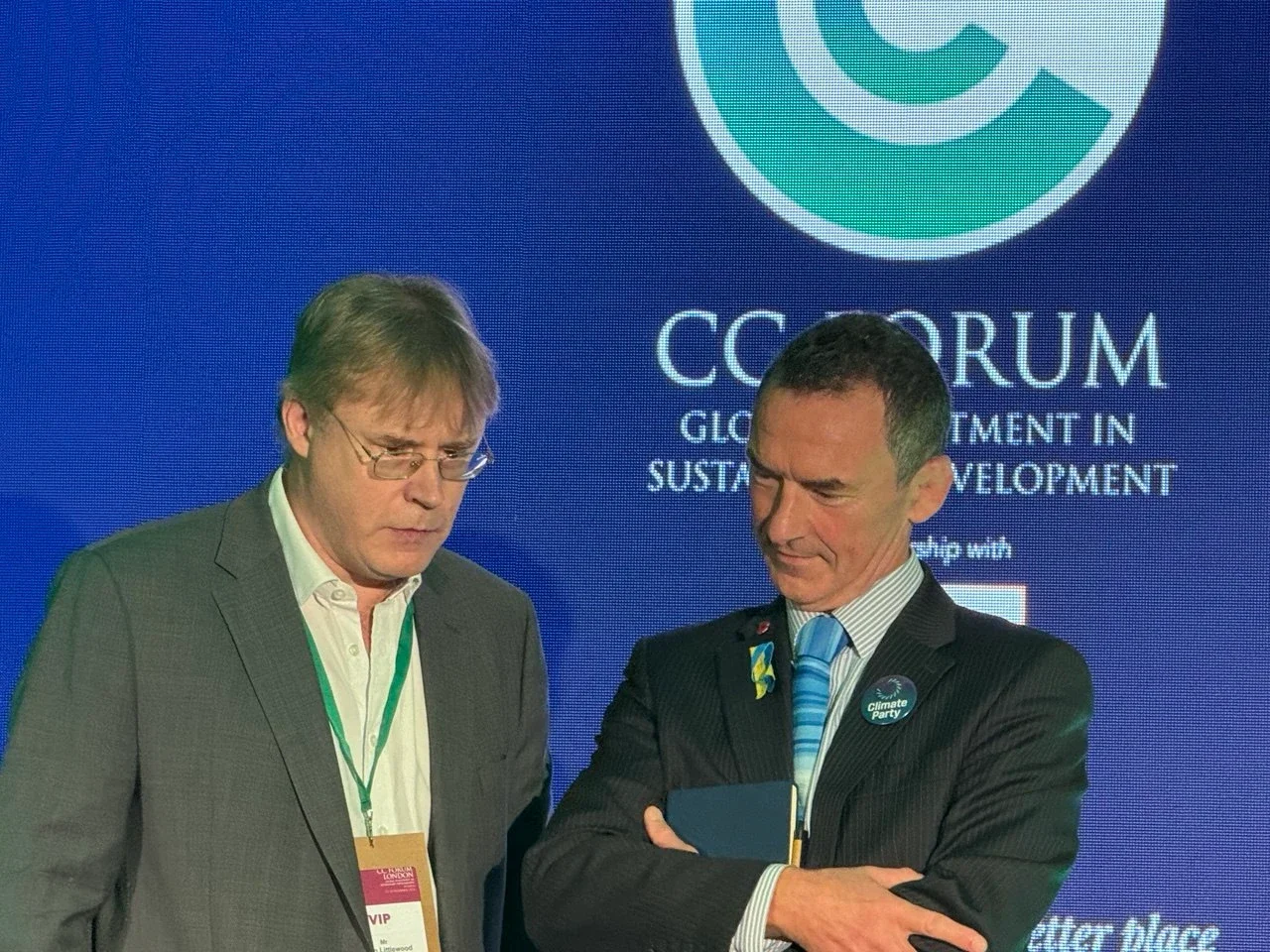
The audience pushed back hard. One guest described an Uber driver paying £70 a day to charge an electric car. Gemmell replied that home charging is "cheap as chips" and that the gas price drives the British power price. Studennikoff’s verdict was that both sides were right. Private capital and political frameworks have to point the same way, as they did, he reminded the room, when governments cooperated on the ozone layer in the late 1980s.
The middle of the day turned to energy and computing.
Haramein’s fireside. The most unusual session was a fireside chat between Konstantin Pavlidis and the physicist Nassim Haramein. Haramein said he had spent forty years trying to unify quantum and relativistic physics and had found "one fundamental field at the source of creation". He also said his labs had evidence for "benchtop devices that will run your house, your car, your spaceships eventually" by drawing on vacuum energy. These are his claims, contested in mainstream physics, and they were presented as such. His question to the room was simpler: why is research on zero-point energy "not the most funded research on the planet"? He was also blunt about the space race: "We’re not going to go to Mars with rockets. We’re just not."
Multiverse Computing. Edward Mier-Jedrzejowicz, an investor, presented the company as one of his fund’s bets. Its technology compresses existing language models; he said this cuts their size by up to 98 per cent, speeds them up four to twelve times and reduces energy use by around 80 per cent. "AI is hitting a hard wall, as we’ve said. And one of the key issues is energy management." The valuation forecasts that followed were an investor’s pitch and are reported here only as that.
HyKin Energy. Mark Amelung, of the Danish company, put the physical problem plainly: "AI may be digital, but it runs in data centers, and data centers are intensely physical. Power, cooling, water." HyKin uses submerged rotors in rivers and tidal straits to send pressurised water ashore, where turbines generate electricity. The same water can cool the servers. He said the company was signing a memorandum towards a joint venture in Sri Lanka. "Markets like categories. Investors operate within mandates, but physics couldn’t care less."
The data-centre numbers. In a short clip from the day, a speaker read out International Energy Agency figures: data centres used about 415 terawatt-hours in 2024 and could approach 945 by 2030. "In the U.S., data centers are nearing half of the demand growth."
Skyler Zhang. The Toronto investor, who could not travel, sent a recorded keynote about "quiet momentum": ignore the noise of the market, build independent judgement, and ask what you bring besides money.
The 15:00 panel on decarbonising the most polluting industries was moderated by Pascal van Knijff, with Nicholas Frankl, Ron Chandiramani, Alicia Castillo Holley and Stefan Diner.
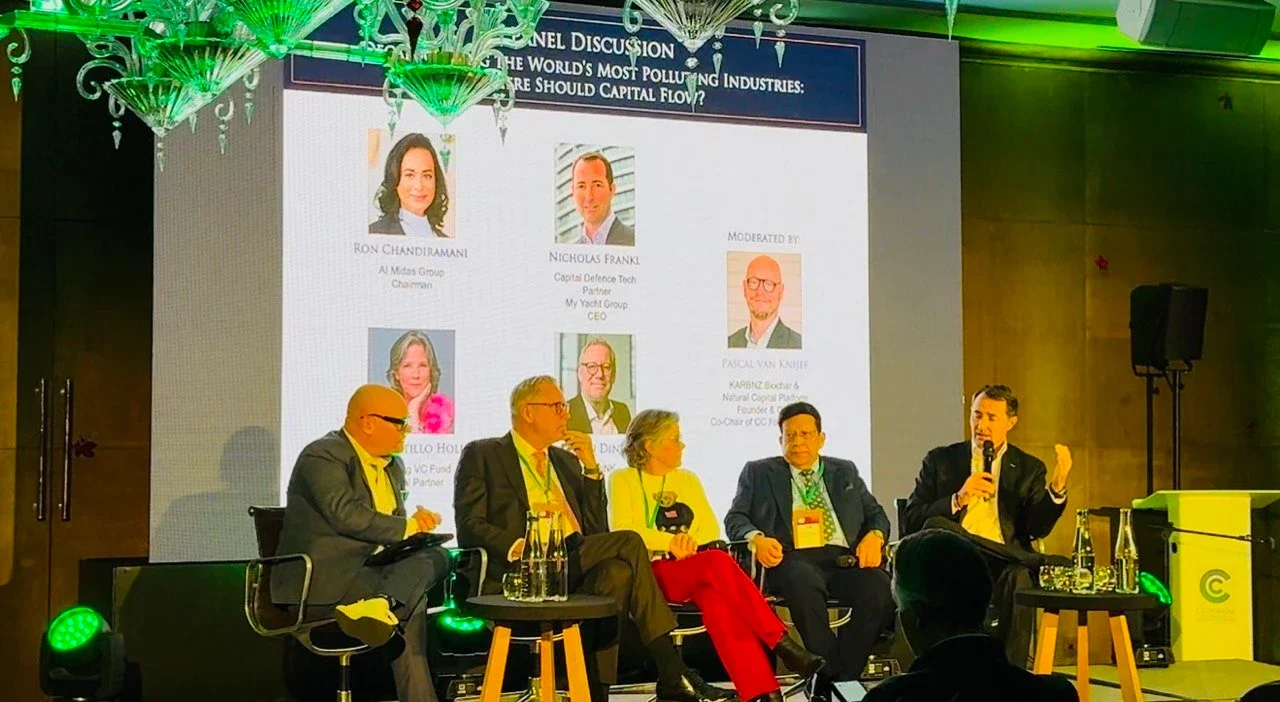
Frankl started with the timescales. Decarbonisation money, he said, is locked up for seven to ten years or more, "a whole different category" of investment, competing for capital with every other piece of the environmental puzzle. He had recently met a developer in San Francisco building a large data centre in Dakota: "you can’t do a data center now unless you bring your own power. And that currently is gas." He then pointed to a US order that military bases become energy independent, which, he said, "only happens with small nuclear reactors".
Castillo Holley said her firm had just invested in Hadron, a New York company building small reactors whose founder, she said, was the youngest ever to take a company public. She argued that clean energy which working people cannot afford leaves "nothing". Diner described how Borås INK coaches textile start-ups to reach "the first customer… the first supplier, or the capital needed" with as little risk as possible. He admitted that investing in start-ups without a track record is "a little bit more of gambling", "but I recommend it".
One panellist, a venture investor and pilot, described how quickly the categories had moved: "Nuclear is certainly one of them, and certainly defense was another one. And those are now, I can tell you, in fashion."
Asked where sustainability fits in an economy of war, he talked about dual-use technology. Drones that help farmers, detect methane leaks and monitor water stress come from the same industry as military systems. "So it’s very easy to label drones with death machines, but it’s a small percentage actually of where humanity will actually end up using new technology." Castillo Holley added that she had been an early investor in Matternet, which, she said, started out delivering medicine by drone in Zurich. Chandiramani reduced the ecosystem to three words: "don’t tell them, show them".
Beyond charity
The longest session of the day, "Beyond Charity", was moderated by Jen Bawden. With her on the panel were Terrence Keeley, formerly of BlackRock; Paul Hutchinson, founder of Bridge Investment Group and executive producer of Sound of Freedom; Dr Lyda Tymiak Lindell, a physician who invests through a family office; and Max Studennikoff.
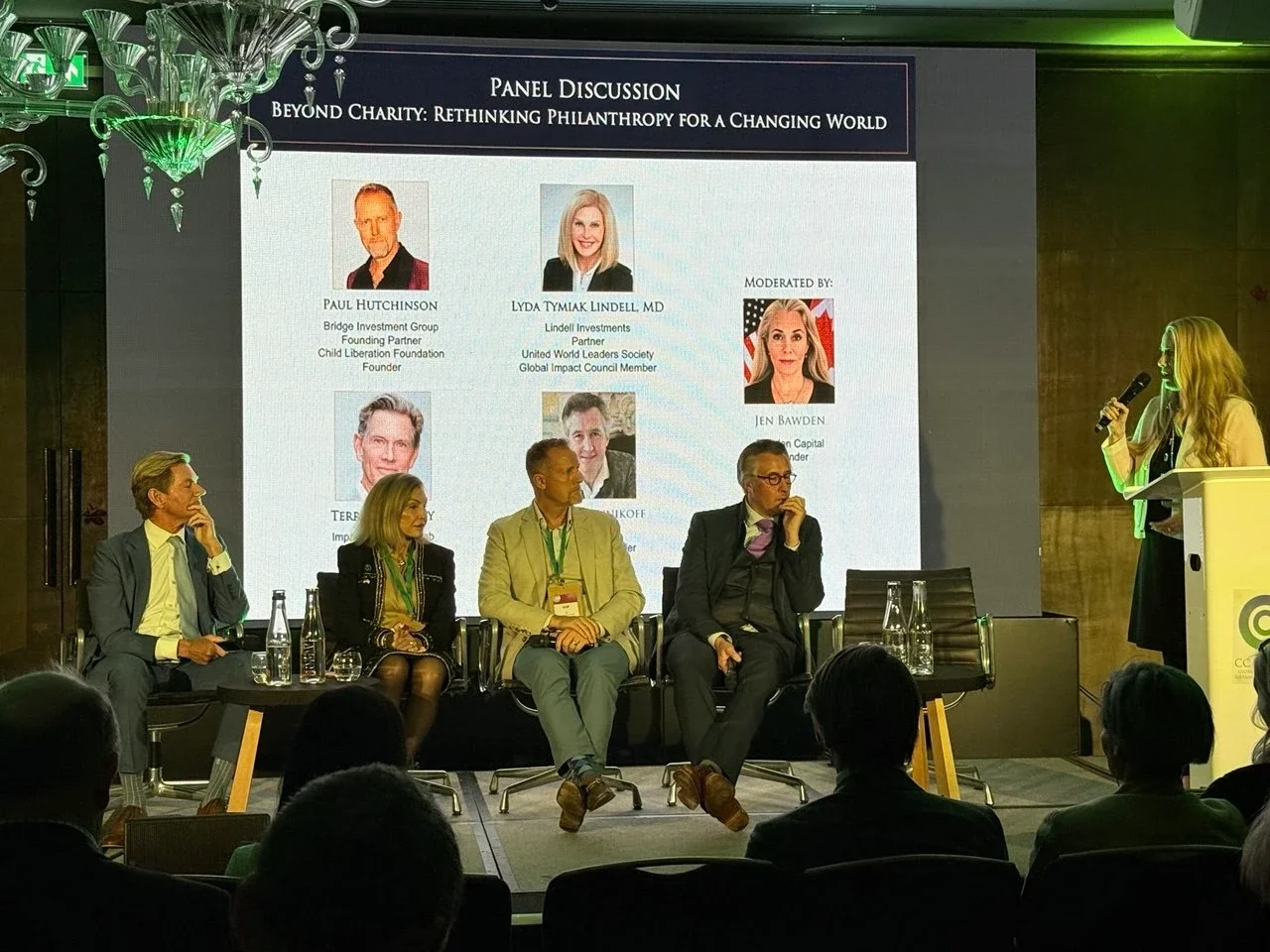
Keeley said that if he had to rank the dimensions of human flourishing, "I’m almost sure I would put spiritual at the lead." He also took aim at the morning’s net zero debate: "We’re not going to die in 2050. It’s nuts." His proposal, which he repeated the next day, was the "1.6% solution". If every asset owner put 1.6 per cent of private assets into verified impact, "I know that would solve the problem."
Hutchinson described leaving finance for anti-trafficking work. "Because we could pull the children out of hell. But if we don’t pull the hell out of humanity, it keeps going." He recalled his wife refusing a $2,000 gala dress: "She said, I’m not wearing a child."
Lindell spoke about prevention in medicine: "We need to prevent the problem, not find the cure."
Studennikoff used the session to announce the CC Forum Foundation, a newly registered British charity. The foundation is meant for causes with no financial return: Amazonian tribes, great apes in the Congo Basin, ocean plastic. Its formal launch was set for the gala the next evening.
Islands and forests
Late in the afternoon two founders brought the discussion down to particular places.
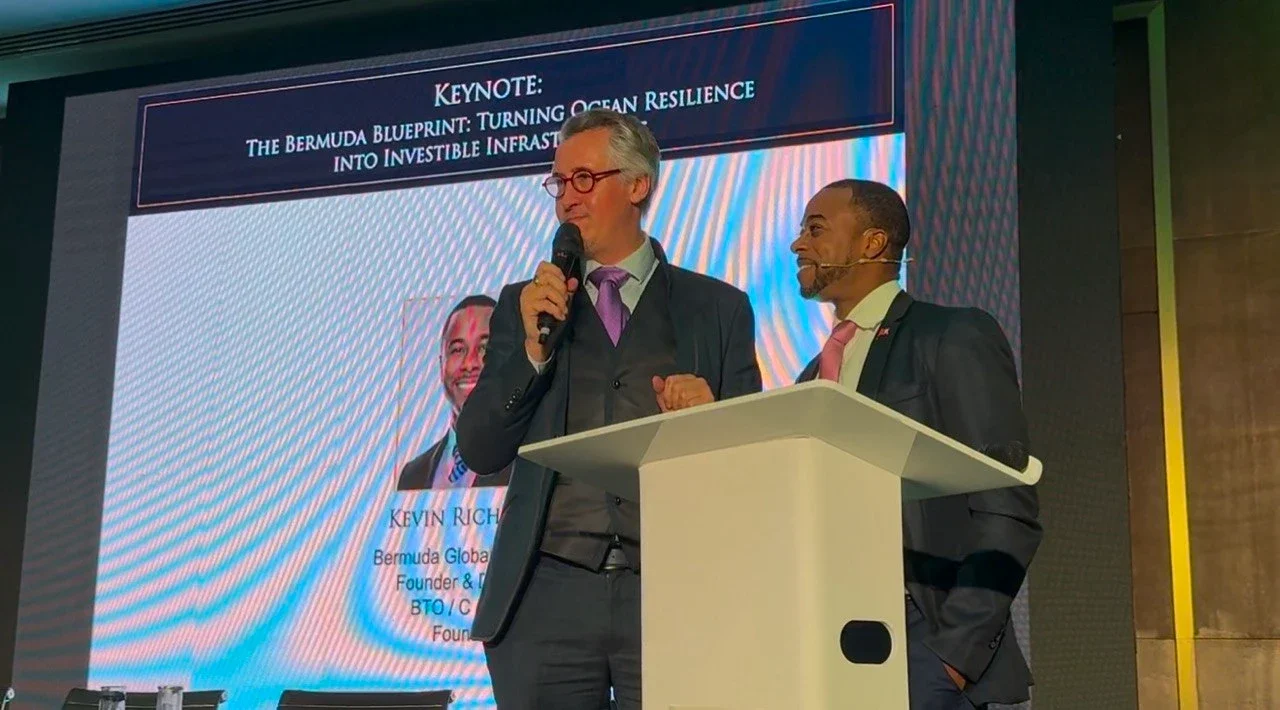
Kevin Richards and Bermuda. Richards described his path from a microgrid idea for Haiti’s national stadium, fourteen years ago at GE, to "the Bermuda Blueprint". Island nations, he said, sit on a quarter of the world’s exclusive economic zones, yet only four of them get most of their electricity from renewables. Blue bonds have raised about $15 billion since 2018, "a quarter of one percent of the sustainable bond market", he said. Bermuda, with its reinsurance market and regulated digital-asset regime, can be a test site. "Projects can be scientifically sound and socially necessary and still be unfinanceable. This is why we need Bermuda." Bermuda is "small enough to test a complete answer, sophisticated enough to structure one properly." Studennikoff, back on stage after the talk, said the forum was in discussion with the Bermudian government about bringing a smaller edition to the island and was "very close to making the confirmation". Richards had closed on his own history with the forum: "In 2022, I brought CC Forum a fund. Back then, I thought I could build it myself. Now, I know better… in 2026, I bring you a blueprint."
Marcela Flores and capomo. Flores, of TierraSphere, grew up in Monterrey where the Sierra Madre meets the desert. "90% of deforestation is caused by the way we grow our foods," she said. Her answer is the Maya nut, or capomo, a forest seed that falls to the ground by the million tonnes. She said it has eight times the fibre of wheat and more iron than meat. TierraSphere collected about twelve tonnes this year, plans ten times that next year, and wants a million trees planted alongside coffee and cacao. "We have to have conservation or production – we can actually have both."
Platforms into connections
The day closed with the Global Investors’ Networks panel, moderated by Lyndsay Howard. It was she who quoted Eliot and counted down to COP31. She set out the scale: global investable capital of around $350 to 370 trillion, and energy-transition investment last year of $2.3 trillion. Alessa Berg, founder of Top Tier Impact, was also on the panel.
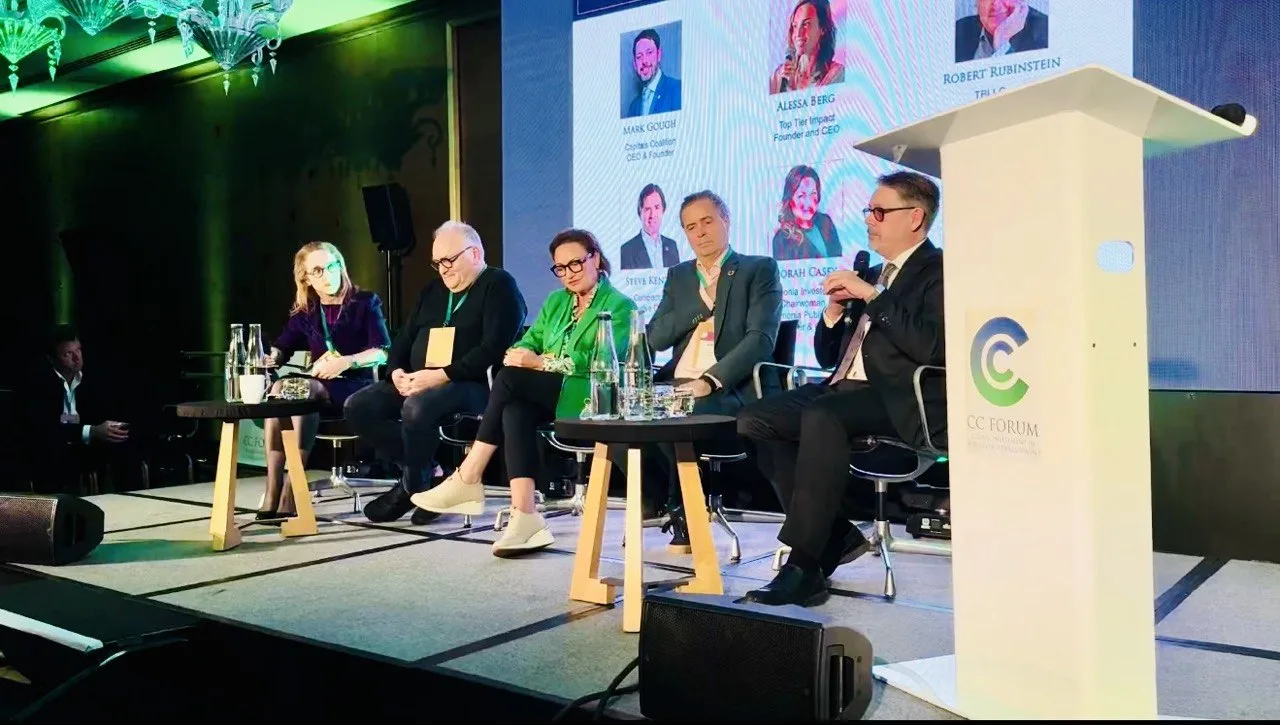
Robert Rubinstein of TBLI was the most quotable. ESG, he said, has "become a fitness club where everybody’s holding up their card that they have a membership, but they never go." He blamed fees: "Conservation generates nothing in fees. Carbon removal generates lots in fees." He wants fund managers’ carried interest tied to measured impact.
Norah Casey, a former Dragons’ Den investor, gave the rule she invests by: "Never invest in the idea, invest in the person." She described her current bet, a London virtual film studio. She proposed that, before COP31, ten people each commit one per cent of what they could invest to a single shared project.
Mark Gough of the Capitals Coalition said impact data had just arrived on the Bloomberg terminal and that accounting bodies were writing minimum standards to make impact auditable within about two years. His most memorable line came from his time at the Crown Estate. The seabed, which the Crown owns, appeared on the balance sheet at a value of zero. "All financial numbers are made up. We make them up." His advice to investors was to look east, to the standards being written in China, Japan and Singapore.
Steve Kenzie of the UN Global Compact said sustainability teams "have brilliant ideas but can’t find funding". He pointed out the asymmetry: "There’s always money for compliance."
The day’s closing words, from the stage: "Impact does not happen here on stage. Impact is going to happen when we connect."
Oxford & Cambridge Club, 28 October
In the evening the conversation of CC Forum continued at the Oxford & Cambridge Club at 71 Pall Mall, ties required.
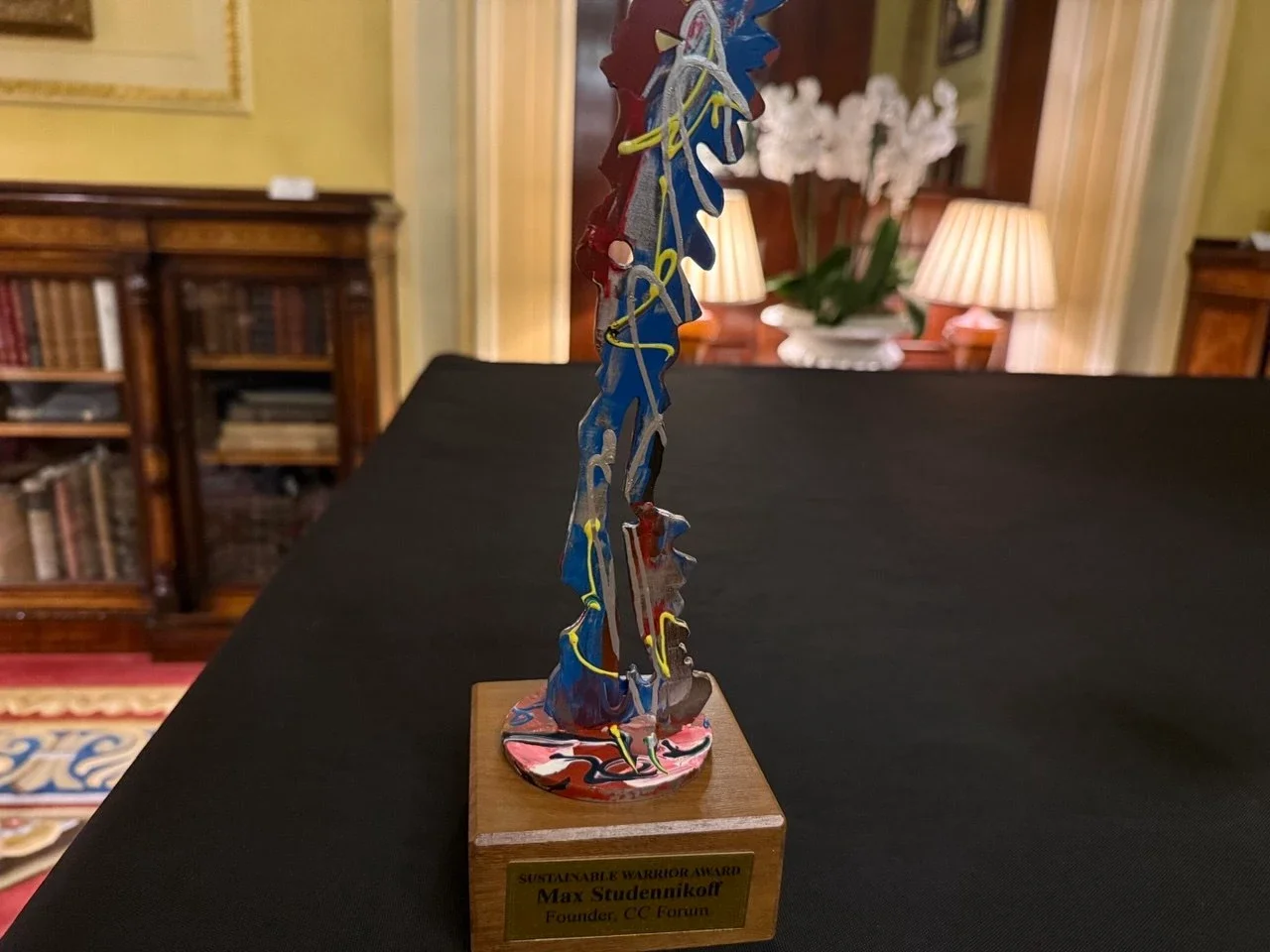
The evening had one small ceremony, and for once the organiser was on the receiving end. Enzo di Taranto, who has worked with Studennikoff since they met at the Cannes Film Festival, presented him with the Sustainable Warrior Award from his organisation. The two had collaborated at COP28 in Dubai and later in Zurich, Monaco, Paris and London. Di Taranto described the forum as "a family of souls, hearts and minds engaged in protecting and regenerating our beloved planet". He said the world stands at a crossroads where "humans, planets, and machines will… coexist and prosper together or will destroy each other". Few people, he argued, can convene royalty, politicians and investors in one room, and Studennikoff had been doing it for years with an "indomitable spirit".
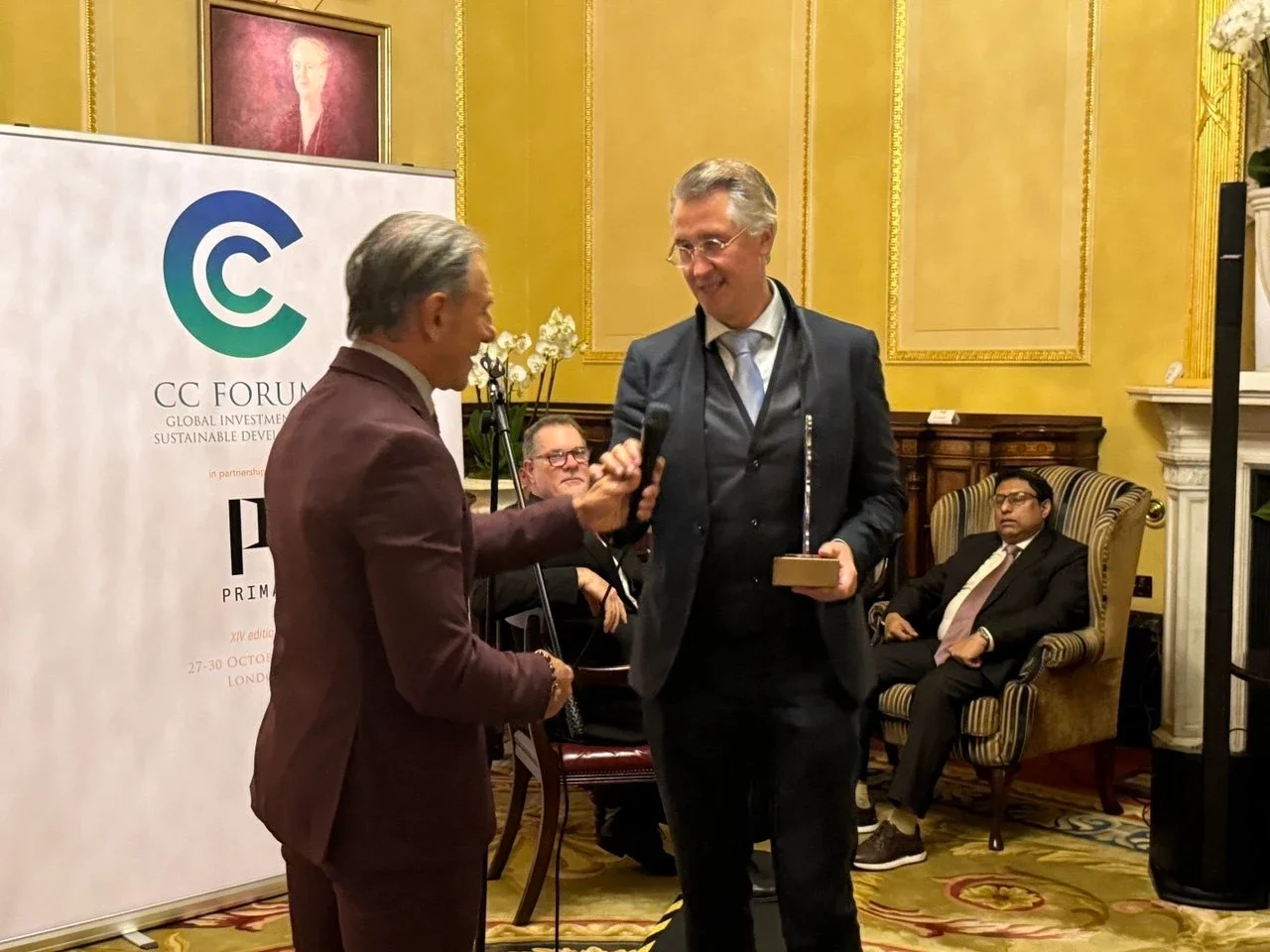
The statuette was the work of an artist di Taranto called Maestro Amadio, aged 92, whose paintings of faces watching nature hung around the room. Studennikoff accepted it on behalf of his team. Then Alex Zhardanovsky spoke briefly about their first meeting, a conversation of less than half an hour at a Monaco investment event: "We literally, when we spoke, we said, we complete each other’s sentences." His message to the room was that "in every single room, no matter how big or how small it is, there are enough people to change the planet".
Can Britain be a sustainability superpower? 29 October
Thursday opened with Nik Gowing moderating "Can the UK Become a Sustainability Superpower?". On the panel were Ed Gemmell, Michael Mainelli, Lucy Johnson and Dr Karen Sumser-Lupson. The Budget had been delivered the day before, and it hung over the session.
Gemmell opened with the cost of his politics. "I have spent several years where I’ve had to check my bank account to see if I could buy eggs." The Climate Party, he said, ran its general election campaign on £25,000. "That is how little money there is in those of us that are trying to save the world." His strategic point was about framing: "people don’t get motivated by saving money. They get motivated by making money." Climate should be sold on the doorstep as the way "to fill your potholes, fund the NHS and pay for defense". He ended on a challenge: "We led the industrial revolution. We can lead the clean industrial revolution."
Mainelli answered for the City. "Britain has a particular problem. It’s basically spent its way into a cul-de-sac." He argued that a "City superpower" was possible where a "British superpower" was not. "Any responsible investor says, I cannot locate a 25-year immovable facility in a country where 46% of the gross value added needs to be taken by the state."
Johnson and Sumser-Lupson. One of the two warned that a government with three trillion pounds of debt should be careful about de-risking anything. She pointed instead to British innovations in retail: leather from spent beer grain, packaging grown from microbes, textiles from banana fibre.
The power of legacy
Bradley Hilton. The morning’s centre was legacy. J. Bradley Hilton told the story of his grandfather Conrad. In 1919 Conrad went to Cisco, Texas, to buy a bank. The deal fell through, all the town’s hotels were full, and his lawyer joked that he should buy one. He did, that night. "So they didn’t get a bed to sleep in that night. They got some chairs to sleep in the office." The lesson Hilton drew was about access to capital, and about the company’s old motto of world peace through trade and travel: "If you break bread together then you know the desire to kill one another kind of disappears."
Studennikoff then moderated a panel on legacy. Ludvig Nobel defined legacy as "what is set in motion". Lord Nat Wei, who traced his family through 24 generations in one village near Hong Kong, said: "We measure the wrong stuff." Success in a family office, he argued, should be counted in "human capacity unlocked". "The key thing as a philanthropist I figured out is it’s not about money, it’s about my capacity to help create capacity in other people." Saarah Survé of Cape Town noted that her parents needed permits to study at university under apartheid, and described a youth programme that asks high-school students what is wrong in their communities, "because they actually have the answers". Bradley Hilton spoke about how his family’s foundation stayed family-run. Dr Peter Klasvogt of the Campo Santo Teutonico in Rome, standing in for an absent speaker, recalled a seminary director who wanted only "burning people… those who burn for something".
Studennikoff announced that the fifteenth edition will be a Pan-African forum in Cape Town next year. He closed the panel with medieval cathedral builders, who laid foundations knowing that neither they nor their children would see the finished building.
Pascal van Knijff, in a short keynote, described money and need as communicating vessels that balance only when connected. "Trust is really the fluid that brings everything together." He then had the whole room rub their hands to make the sound of rain.
Ethics, ESG and the 1.6 per cent
Two sessions in the middle of the day asked whether finance can be ethical by design.
The New Paradigm panel. Elise Hickey moderated "The New Paradigm" and set the frame with a definition of ethics: "knowing the difference between what you have the right to do and what is right to do."
- Walter Fonseca called bribing governments "not profit. That is stupid things", and argued that for families, mere preservation of capital is a job for functionaries.
- Alicia Castillo Holley recalled her socialist father’s warning when she went into venture capital: "you’re going to be sold to the devil." She now runs a family office and wants its wealth to move: "I don’t want my kids to be preserving our wealth. Our wealth has to flow." She also offered the panel’s best line on patience: "You cannot take nine women per month and make a baby."
- A panellist from a family of farmers put it more briefly: "Ethics is the compass. Innovation is a tool."
- Terrence Keeley described three environmental funds returning 4, 8 and 12 per cent. The best performer only traded carbon credits, "which does nothing for the environment. Literally nothing. It’s moving chess pieces."
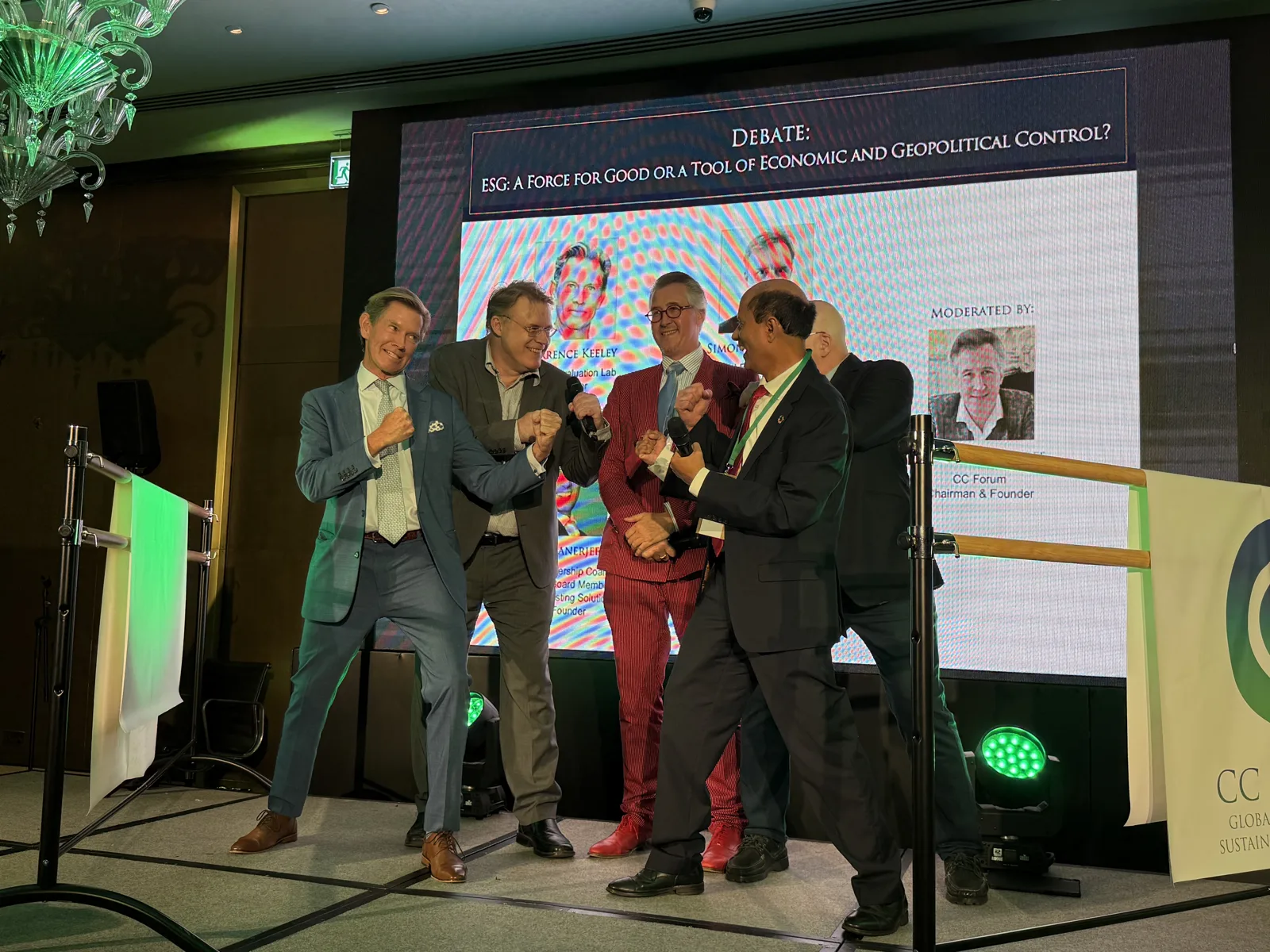
The ESG debate. After lunch Studennikoff moderated the formal debate: is ESG a force for good or a tool of economic and geopolitical control?
- Ben Banerjee defended it. "ESG is the foundation, and impact is the roof." When critics pointed to the oil and tobacco companies that score well, he reached for a family image: "So ESG is a car driven by my teenage son. He dented it. That doesn’t mean that you send a car to the scrapyard."
- Keeley answered with data: "there are 14 ESG rating agencies in the world, and the correlations of those ratings is 0.48", against near-unanimity among credit raters. Paraphrasing the economist Alex Edmans, he said: "The idea is not for a company to be good at ESG. The idea is for a company to be good." In 2020, he said, 31 per cent of ESG-related shareholder resolutions in the United States passed; last year the figure was 2 per cent. Index tilts, he added, achieve little: "People think they’re doing something by being in an index that has 1% less ExxonMobil, 1% more Apple. It does nothing."
- Simon Littlewood recalled that an early ethical index once held a tobacco company among its top holdings because of its staff training. "The fact that their product killed people wasn’t that relevant."
- Mark Beaver warned of a race to the bottom, where less transparent countries take up the activities others drop.
A woman in the audience had the last word on Banerjee’s car: "It’s who’s driving that damn car." Studennikoff’s ruling was that ESG stays as a framework but "needs considerable revamping". It is "not a panacea".
Runa Alam, introduced by Keeley as perhaps the leading investor in Africa, set out the case: the fastest-growing population, rapid urbanisation, growth forecast to outpace Asia. "Here’s the problem. Very small amount of money is going into Africa."
Nik Gowing answered Keeley’s "unbridled optimism" of the day before: "I’m going to talk about bridled optimism." He described a recent permafrost collapse in Nepal and Tibet as "catastrophic".
Stefan Diner of Borås INK, a Swedish textile incubator, began with an admission: "The problem is that the textile industry is a pretty dirty industry." His colleague described the job of an incubator: "We challenge the founders to answer difficult questions before they meet the investors."
Ben Banerjee returned with four priorities for a resilient Europe: defence and security, energy independence, AI and digital sovereignty. "Clean energy is not only about climate change. It is about our own sovereignty." He closed with the line the forum might have printed on its programme: "Our greatest legacy will not be the wealth we accumulate. It will be the world we create with our wealth."
PRIMA and the trust economy
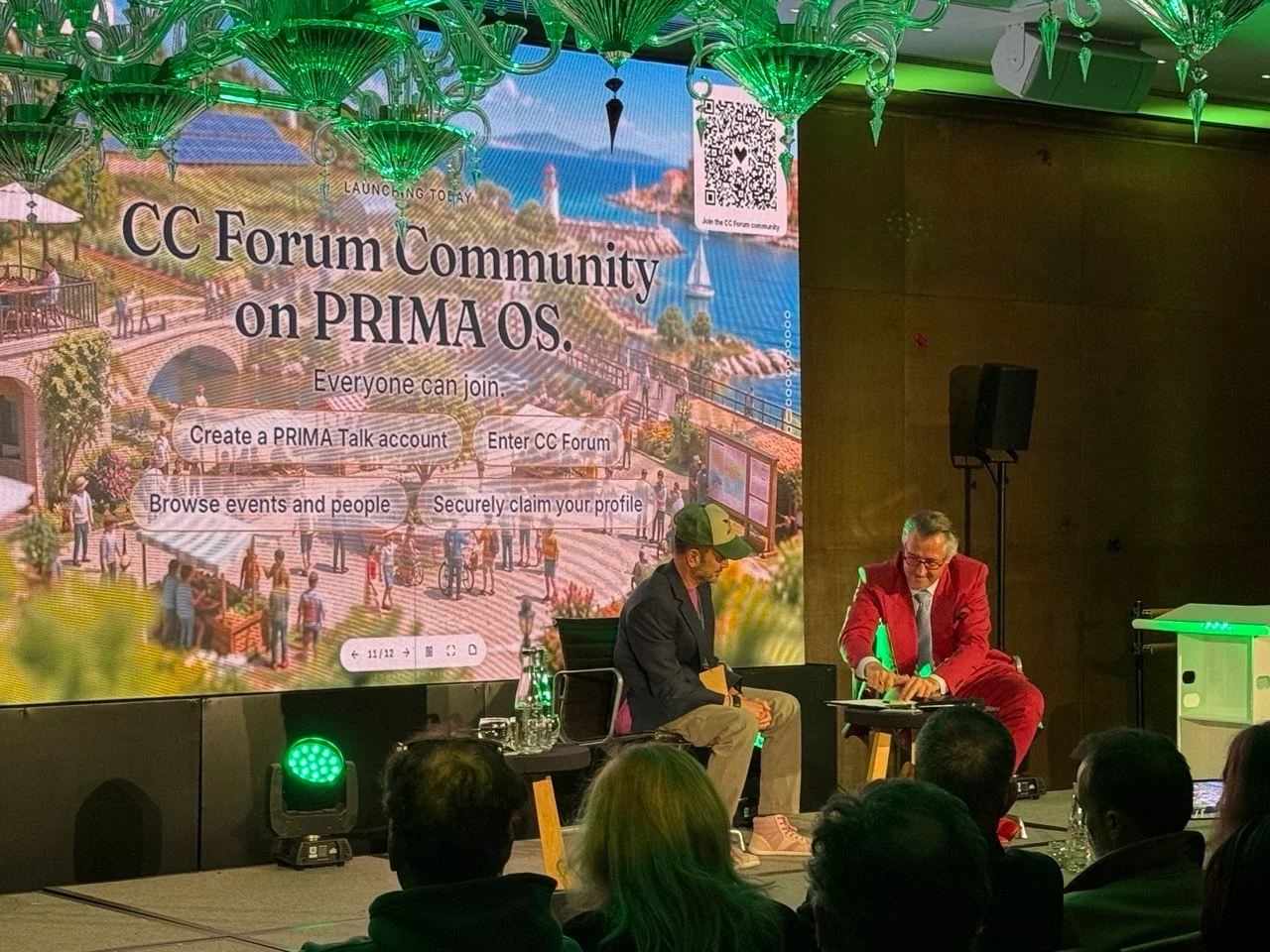
At 12:50 Studennikoff hosted a fireside chat with Alex Zhardanovsky, founder of PRIMA, the forum’s partner for this edition. Zhardanovsky described PRIMA as a recommendation economy. A person who recommends a hotel, a restaurant or a service provider is paid when the booking happens, rather than the platform keeping the margin. "The final role of AI is just to connect humans together." He wants to move business "from being extractionary and profit-focused to being expansionary". Asked how PRIMA earns money, he said the model is "entirely performance-based": an introduction carries a fee that all parties agree in advance, paid only when the deal is completed.
On stage the two signed a partnership between PRIMA and CC Forum. In a LinkedIn post after the forum, Studennikoff wrote that PRIMA, the Title Partner of CC Forum London, had committed £10 million to support the forum over 2027 and 2028. PRIMA also hosted an investors’ brunch the next morning at the venue of the Fem Capital Salon.
Where the money should go
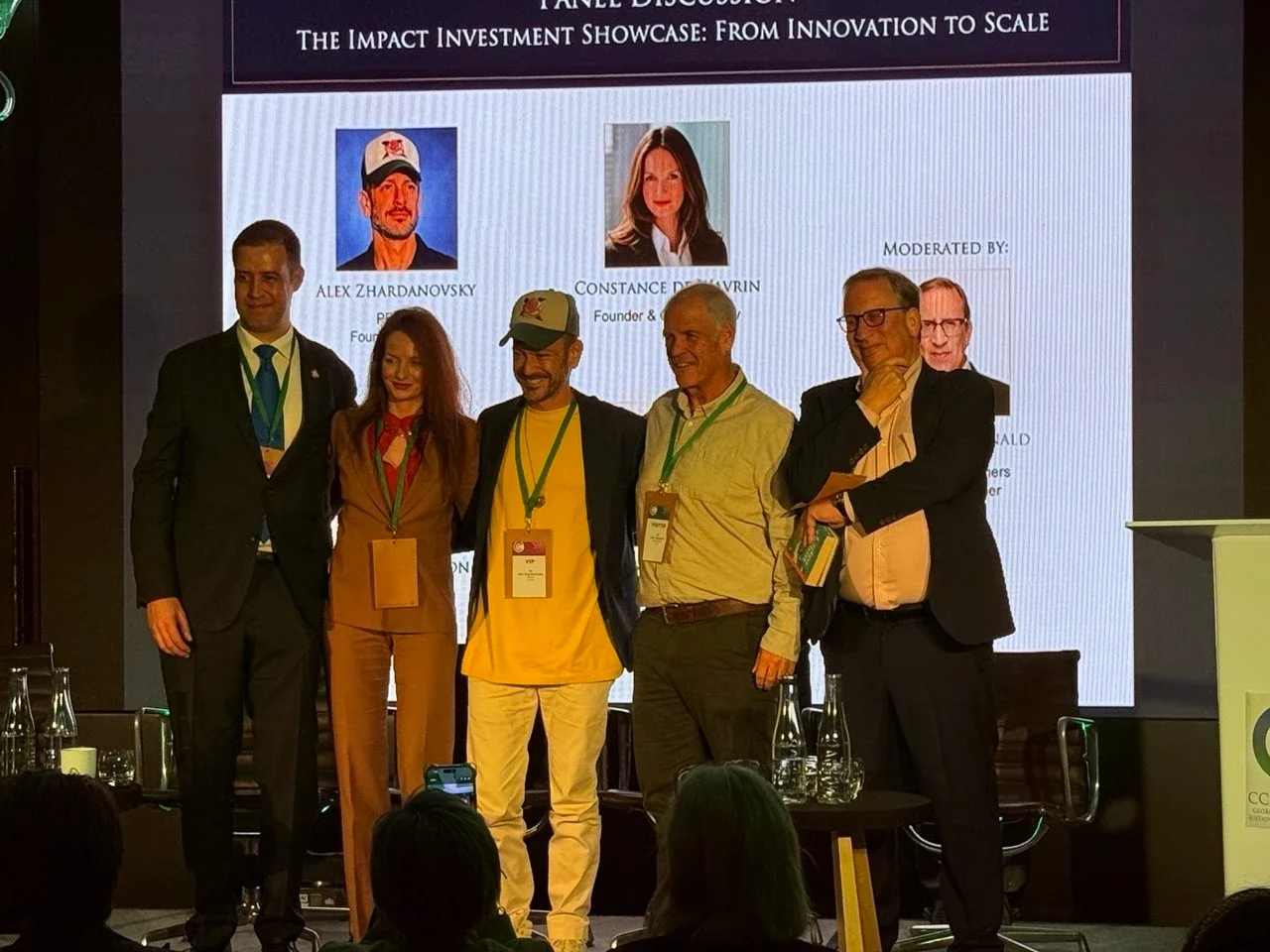
The green banking panel, moderated by David Gibson-Moore, was the forum’s most practical hour. The speakers were Derren Powell of HeaiRWorld, Jonathan Moon of Rathbones Greenbank, James Sproule of Handelsbanken and Per Wimmer.
Gibson-Moore set out the gap. Net zero by 2050 needs physical assets worth around $275 trillion, or $3.5 to 5 trillion a year, against roughly $2.3 trillion actually being spent. Only about 2 per cent of private sustainable capital goes to emerging markets.
Powell described HeaiRWorld as data infrastructure that helps banks lend to sustainable small businesses. Over a decade, he said, such firms have proved "two to three times more likely to succeed and more investable".
Moon quoted Lucy Johnson from that morning: "fear doesn’t motivate people but hope does."
Sproule disagreed with the numbers altogether: "Sorry, I don’t agree with those numbers. I think completely the governments are bust." He warned that a sovereign debt crisis would force austerity. He also described how London lawyers priced his early wind-farm deals: 150 per cent of fees if the deal closed, 50 per cent if it did not.
Wimmer described AI as the new railway boom: sustainability "is being drowned out by the new railroad revolution called AI". Data centres, he said, may use 3 per cent of world electricity by 2030. "It’s Japan, annually." He also pointed to the gap in the middle of British finance: scale-ups that have raised £1 million to £5 million and then cannot find the next £15 million. Of fiscal policy he said: "It’s about the drug addict who is just looking for the next fix. It’s very short-termism."
From the audience, the diplomat and investor Dr Diane Martini asked the question no panellist had answered. Entrepreneurs in poorer countries "simply can never get the funding because they never can make this first step" – paying €30,000 to €80,000 in due diligence, legal and insurance fees before anyone will lend.
What the scientists say
An Explorers Club fellow on Svalbard. Before the climate science panel, a fellow of the Explorers Club described a recent trip to Svalbard, where scientists had shown him how far the glaciers had retreated over twenty years. "For those doubters… I kindly invite you on a trip to Svalbard."
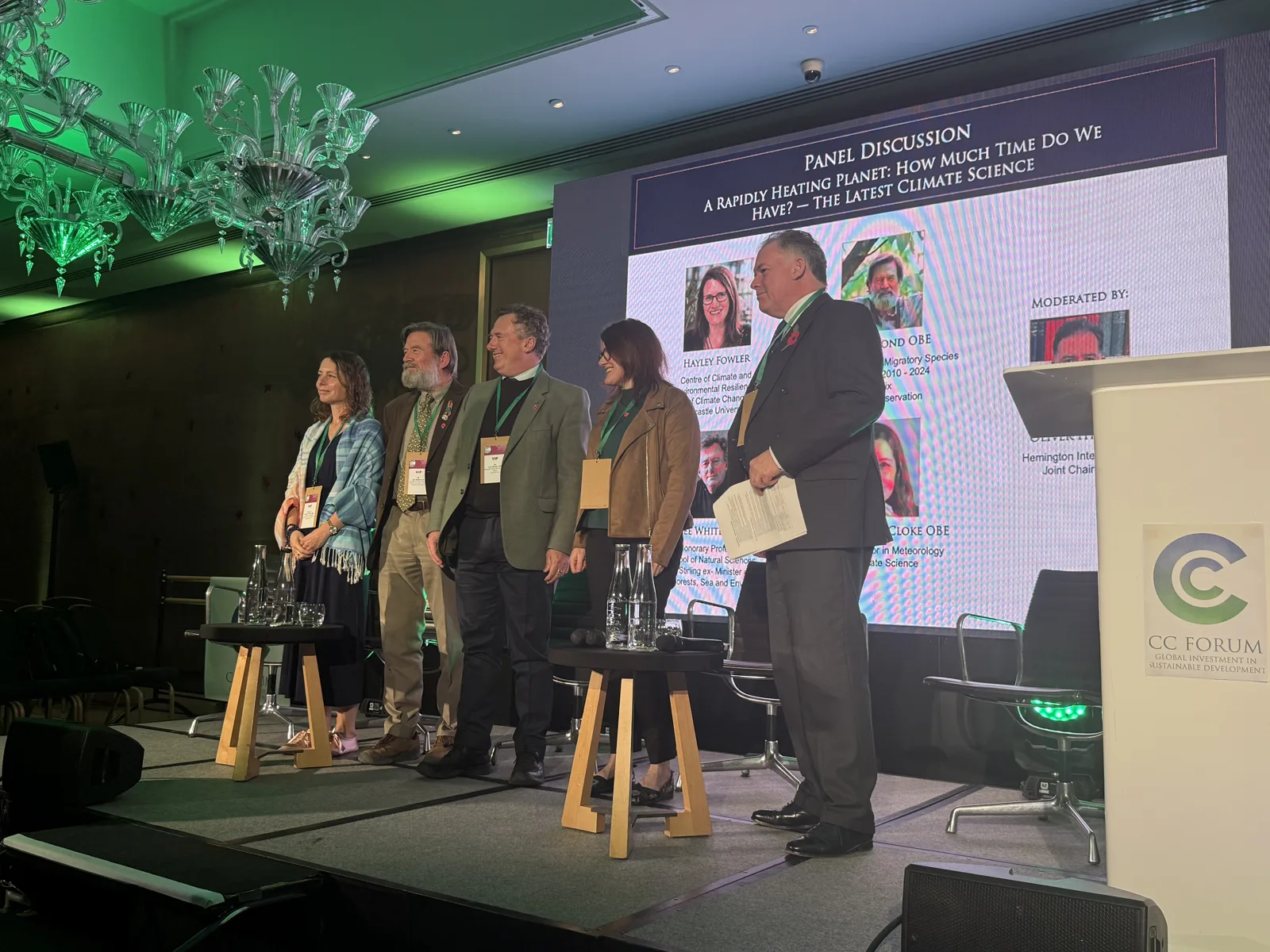
The panel. Then came the session the forum had arguably needed from the first day, "What the Climate Scientists Say". The scientists were Professor Hayley Fowler, Professor Hannah Cloke, Professor Lee White and Ian Redmond.
Fowler began by noting the gap: "So we’ve not talked about climate change very much at this climate change forum." Warming has been around 1.5°C above pre-industrial levels for roughly three years. With a super El Niño coming, "it’s likely that it won’t go below 1.5 degrees above pre-industrial temperatures in your lifetimes". She expects significant falls in rice and wheat harvests next year and warned that British food security would be affected. During the super El Niño of 1877, she said, tens of millions died of famine. The Climate Change Committee’s adaptation advice is to plan for at least two degrees by 2050. "I do have hope… But we do need to do something tomorrow."
Cloke, who works on flood forecasting, said that much of Britain was in drought even while it rained, and that "we are not in a water secure situation in the UK". Of the summer’s European heatwave she said: "Thousands of people died… And mostly people just don’t see it because it’s a silent killer."
Redmond said he had arrived in Africa fifty years earlier, almost to the day, to help Dian Fossey study gorillas. Over that time, he said, the world has lost about three quarters of its wild animals, close to the 73 per cent fall in monitored wildlife populations since 1970 that WWF’s Living Planet Index reported in 2024. He connected British gardens to African forests through the swallows and swifts that migrate between them. He described what he sees as the core mistake: "We celebrate when the rate of deforestation declines… it’s just we’re cutting it down a bit slower." His conclusion: "If it’s taking 8 billion of us to get into this mess, it’s going to take 8 billion of us to get out of it."
A meeting at Svalbard. One of the scientists recalled a small meeting at Svalbard about a decade earlier, attended mostly by financiers. Its conclusion still stood: "Politicians aren’t going to solve this. It’s going to be finance world."
Studennikoff summed up with impatience at the summit circuit. At COP after COP, he said, heads of state conclude that it is time to start walking away from fossil fuels: "My god, we should be running away from it."
From Hollywood to headlines
The last panel, moderated by Nik Gowing, asked whether entertainment and media can change the climate conversation.
Lawrence Freiberg opened the session. A music promoter whose partners produced Live Aid in 1985, he is now building the We The World Tour, a year of concerts with A-list names, and he wants to "lock arms with CC Forum". "The CC Forum, I believe, should be right in the center of this whole movement," he told the room. The tour has already been staged in Times Square in New York.
After the forum I sat down with Lawrence and the Olympic skier Suzy Chaffee. He described the plan: a return to Times Square on Earth Day, "a major concert every single month starting in March", and in the summer "the big Live Aid-type show" called We The World. What CC Forum brings, in his view, is the substance: "it was all about the programs and issues, the solutions… And CC Forum represents all of that." About the young audience he was simple: "Giving them hope is our job." The full interview will appear on Creativity’s UK soon.
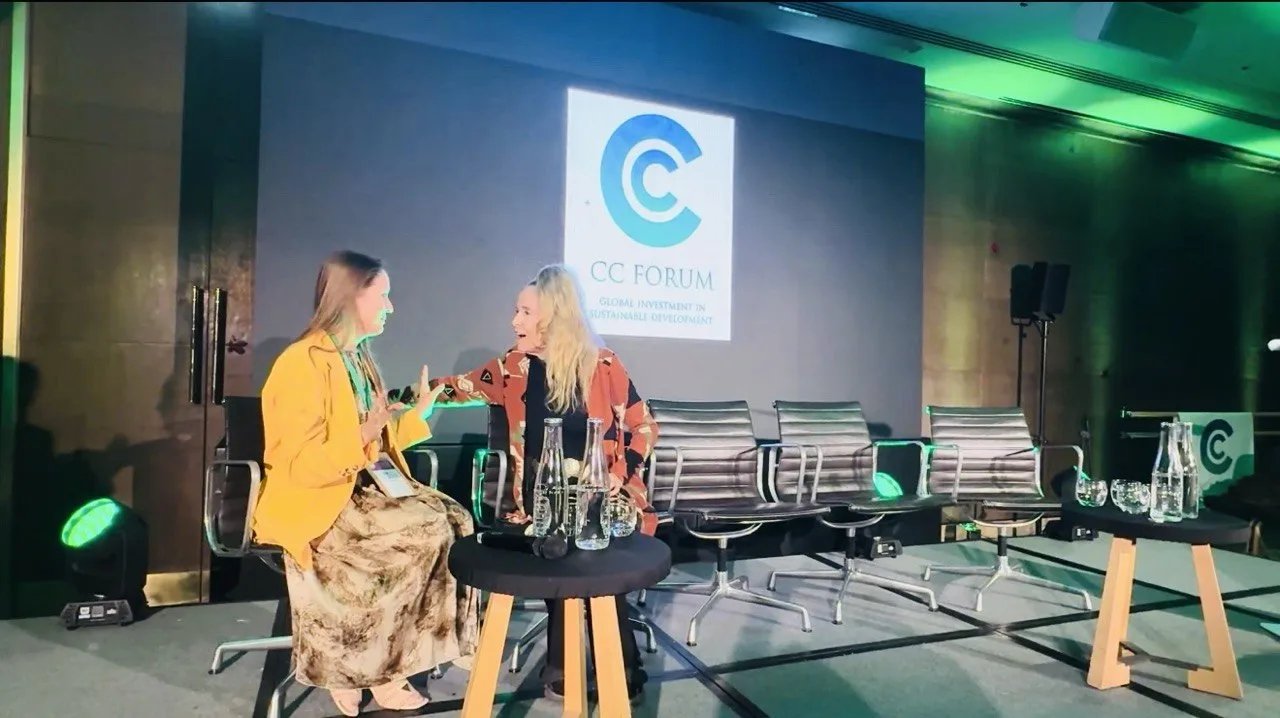
Hada Vanessa Hutchinson, director and actress, argued that children form their identity from media rather than textbooks, and that fear makes audiences shut down. "Planet Earth doesn’t need humans to continue thriving. We need planet Earth." Artists, she said, have "an invisible moral duty".
Frankie Oliver said celebrities are nervous of being attacked "for the flight or the burger they ate last week". Films are not the tool for public information: "It’s a bit like telling Churchill to go to war with a movie." She also answered an earlier keynote that had played down carbon: "Carbon is 100% the problem."
Nigel Dacre, a former news editor, remembered the old newsroom reflex: "When climate activists started talking, the BBC went out and tried to find a climate denier to balance it."
A scientist in the audience summed up the difficulty of televised debate: "You cannot argue against somebody who makes stuff up."
The forum closed with a call from the stage: "We can talk about it, we can chastise each other, we can swear at each other, we can disagree with each other as much as we like, but we have to leave this room and actually make things happen." Studennikoff thanked the organising committee and the partners by name, noting that there "hasn’t been a single glitch today".
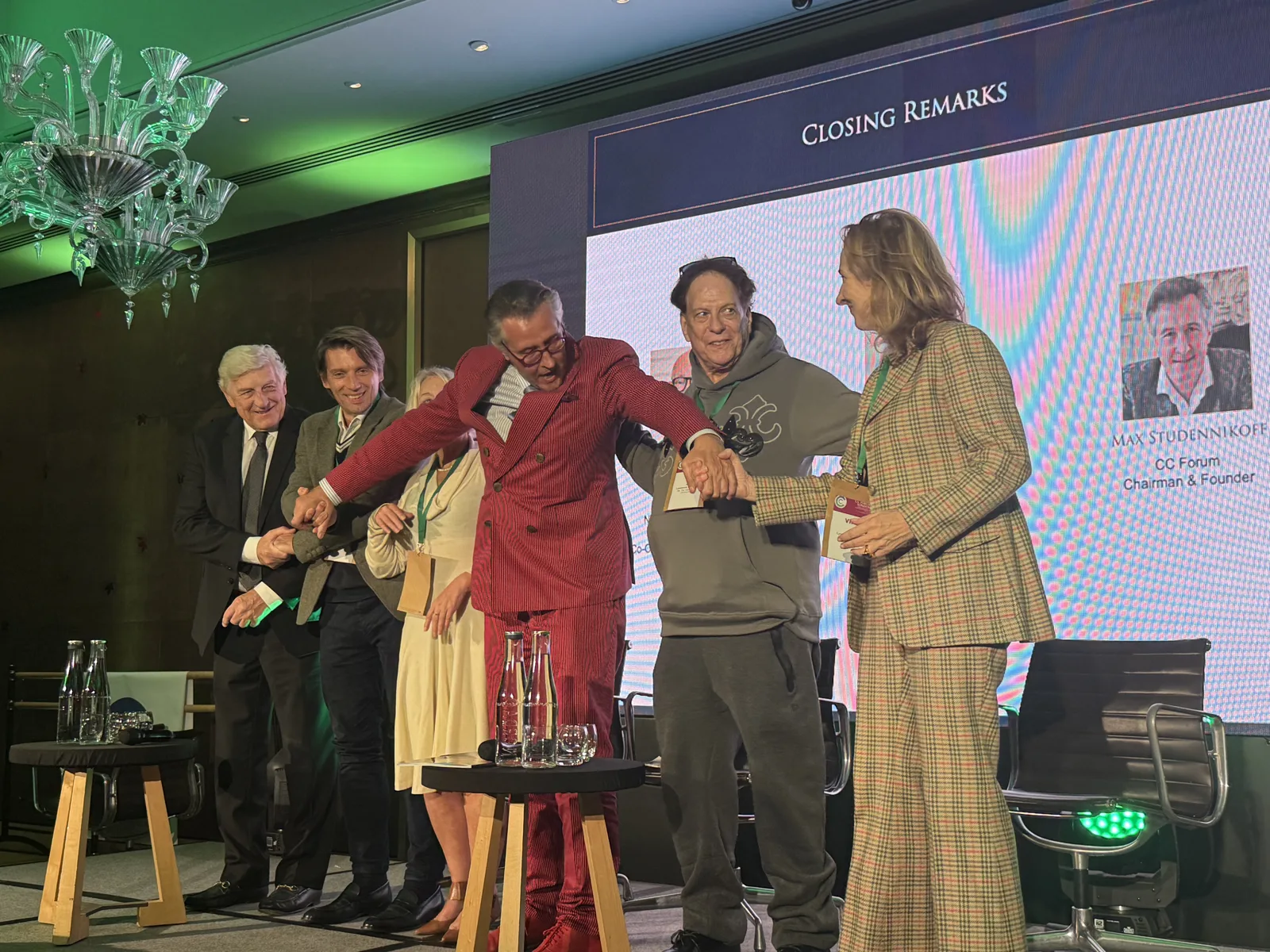
The same evening the forum moved into the banquet hall of The May Fair Hotel: black tie for men, evening dresses for women. The evening opened at 19:00 with a green carpet reception and photocall, and Ludvig Nobel was master of ceremonies.
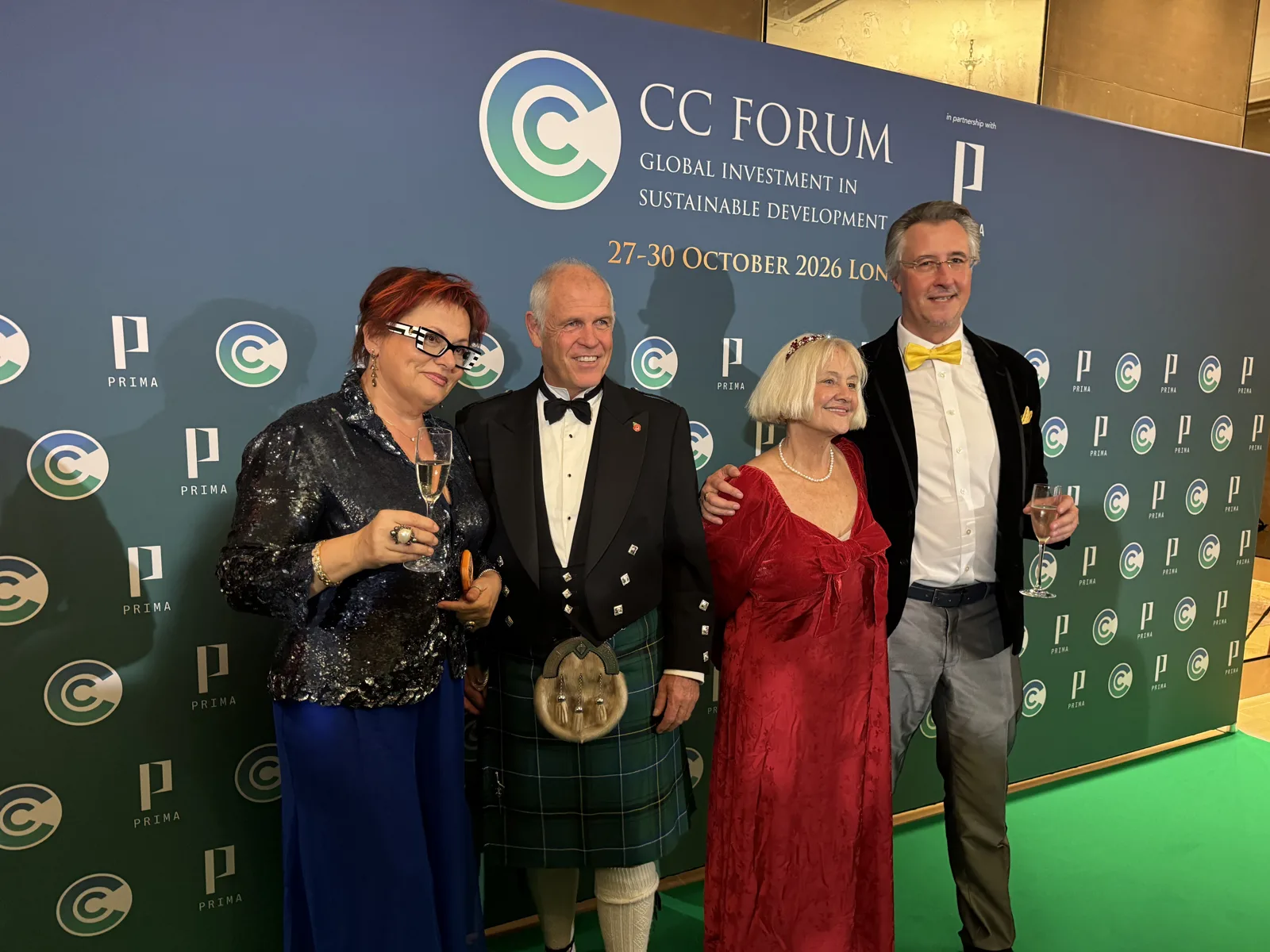
Nobel, Studennikoff and Zhardanovsky opened the evening. On the big screen came video messages from Oren Lyons, Hereditary Chief Phil Lane Jr. and His Eminence Shyalpa Rinpoche, and then Dr Karen Sumser-Lupson, Nobel and Studennikoff formally launched the CC Forum Foundation. Between the speeches I listened to the violinist Jeroen de Groot, the mezzo-soprano Stephanie Wake-Edwards and the baritone Jack Lawrence, and watched the ballerina Hanna Park. The awards ceremony and a charity auction followed, and the networking went on until midnight.
The honourees of this edition were Jeffrey Sachs, who had received his award two days earlier at the House of Lords, Paul Hutchinson, Runa Alam and Sri Sri Ravi Shankar. Ravi Shankar could not attend and sent representatives to accept the Global Award for Spiritual Leadership. Ravi Shankar was appearing at an event in Germany that evening, and his video message could not be played in the hall. Studennikoff said he plans to fly to Bangalore early next year to present the award in person.
With the launch, the CC Forum Foundation became fully operational as a UK-registered charity. It came with a pledge that invites businesses to commit 1 per cent or more of their annual profits to charitable causes. Studennikoff’s stated ambition is to turn the pledge into a global movement.
Between the performances the hall heard Indigenous elders on screen. One message asked for "a reconciliation between peoples and the natural world, between nation-states and the forests that sustain us, between corporations and the resources that they mine, the fish they catch".
The CC Forum Foundation was introduced with a short film. It presented the charity, registered under number 1218255, with the motto "an inch of action is worth a mile of intention" and three disciplines: sustainable development, monitoring and evaluation, and measuring impact. "If we say it works, we will show you the evidence." The film then described programmes designed with a delivery partner, governments and local institutions.
- Jamaica. After Hurricane Melissa in October 2025, 65 per cent of the population lost access to safe drinking water. The proposed Jamaica Climate Resilient Water Security Programme would build the country’s first large-scale desalination system powered by geothermal energy, designed to keep working through hurricanes and power cuts and to supply 420,000 people. A new university degree in renewable energy and desalination would train Jamaican engineers.
- Zambia. In the Northern and Muchinga provinces, drought and floods threaten the food and income of around 840,000 people.
Paul Hutchinson said the biggest challenges of the moment "can be solved in our lifetimes", as long as they are not made political. He drew on his work against child trafficking: "This isn’t something that should divide us between rich and poor and white and black and right and left." The way forward, he said, "is not by fear-mongering, is not by division, is not by hatred. It is by unity."
Speaking from the stage that evening, Zhardanovsky drew a line between his company and the new charity: "I’m not a philanthropist. I’m a business guy. I will not be on the philanthropic board. I will operate the business."
For a dinner about capital, the evening carried a surprising amount of art. The hall was lit in blue, with candelabra on every table. After the main course a string ensemble of eight or ten players and a pianist took the stage, the two opera soloists sang and the ballerina Hanna Park danced. The dinner doubled as a charity auction, held shortly before the networking that ran until midnight.
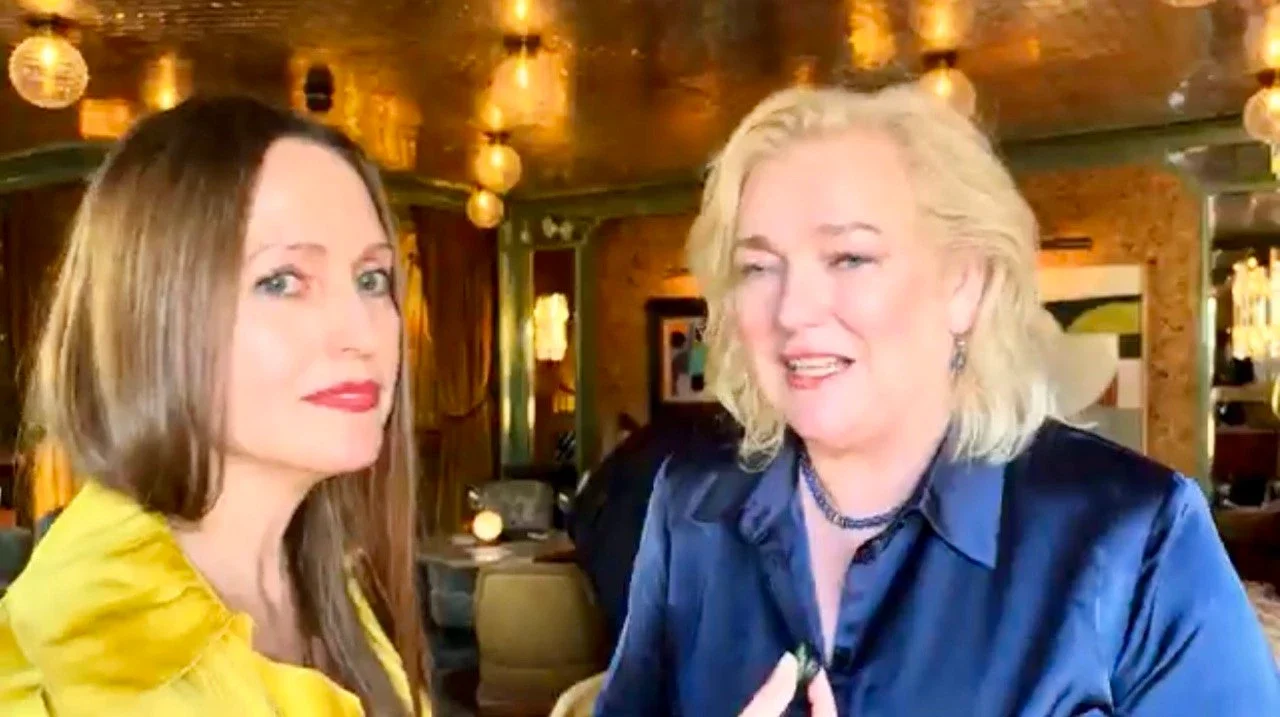
Fem Capital Salon, 30 October
The forum ended on Friday at Flute in Soho, 20 Broadwick Street, with the Fem Capital Salon run by Christine Koetsier and her team.
The day opened with a premier panel on "Influencing the Flow of Capital". Himesh Patel gave a keynote on the future of currency, and Pt Dr Sanjeev Kumar Srivastava spoke on the science of time. After the Remarkable Recognition Award and a founder’s session with a youth board, Jeroen de Groot played the violin once more, and Max Studennikoff and Christine Koetsier closed the salon with a fireside chat.
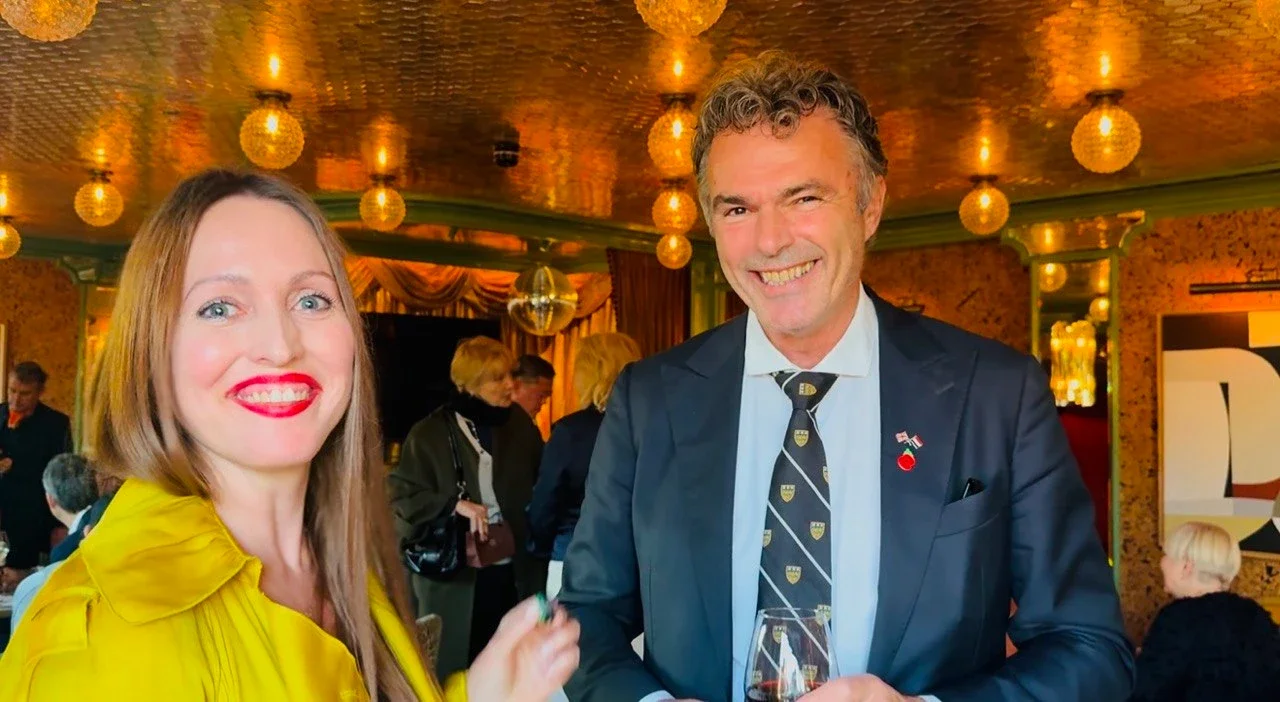
The salon deserves more room than a closing section, and Creativity’s UK will return to it in a separate piece.
After the forum
The question underneath the panels, whether private wealth can do what governments have not, deserves more than a closing section. I answer it in a separate essay for BGTC, with cases from Israel, Saudi Arabia, Costa Rica, Ecuador and Indonesia, and the idea of a solar shield that several guests and I discussed in the corridors. That idea, a sunshade near the Lagrange point L1 that would dim sunlight on Earth by about one per cent, was the one I kept returning to with guests between sessions. I have written about what it would ask of us in A Cloak for the Planet, and Venture Signal looks at its cost and governance in The $134bn sunshade nobody owns.
After the forum, Studennikoff also announced a strategic partnership with the AI and Sustainability Alliance, which he described as supported by the Vatican through Magnifica Humanitas, the document on artificial intelligence issued this year by Pope Leo XIV. The stated aim is to direct AI towards sustainability and human progress.
COP31 opened in Antalya twelve days after the forum’s second day, and Studennikoff will be among its speakers, so the arguments heard in Mayfair will travel there with him. Whether the commitments made in London reach the negotiators is the question for the fifteenth edition, which he says will go to Cape Town.
About the author
Maria Bregman is a cultural strategist, documentary filmmaker, and the founder and editor-in-chief of Creativity’s UK. She contributes to international publications including Esquire, ELLE and Venture Signal. For strategic media collaborations and editorial partnerships: mariabregman.com.
Read Maria Bregman's longread on Creativity's UK
Sources
- Creativity's UK – Maria Bregman, CC Forum London XIV on Capital, AI and Climate (longread)
- BGTC – Maria Bregman, Can Private Wealth Save the Planet?
- Creativity's UK – A Cloak for the Planet
- Venture Signal – The $134bn sunshade nobody owns
- Jeffrey Sachs at the House of Lords, 27 October 2026 (video)
- Max Studennikoff, From Dialogue to Action, LinkedIn, 3 November 2026
- Creativity's UK – CC Forum London XIII, March 2026
- cc-forum.com – programme and speakers
This report was written by Maria Bregman for Creativity’s UK, an accredited media partner of CC Forum London XIV, and is published here in full for London BGTC Society members. Photographs by Maria Bregman and Creativity’s UK.
← Back to Ledger