Classical music in London - concert halls and opera for members
Where London actually listens: the great halls, the opera houses and the intimate rooms, and what each does best.
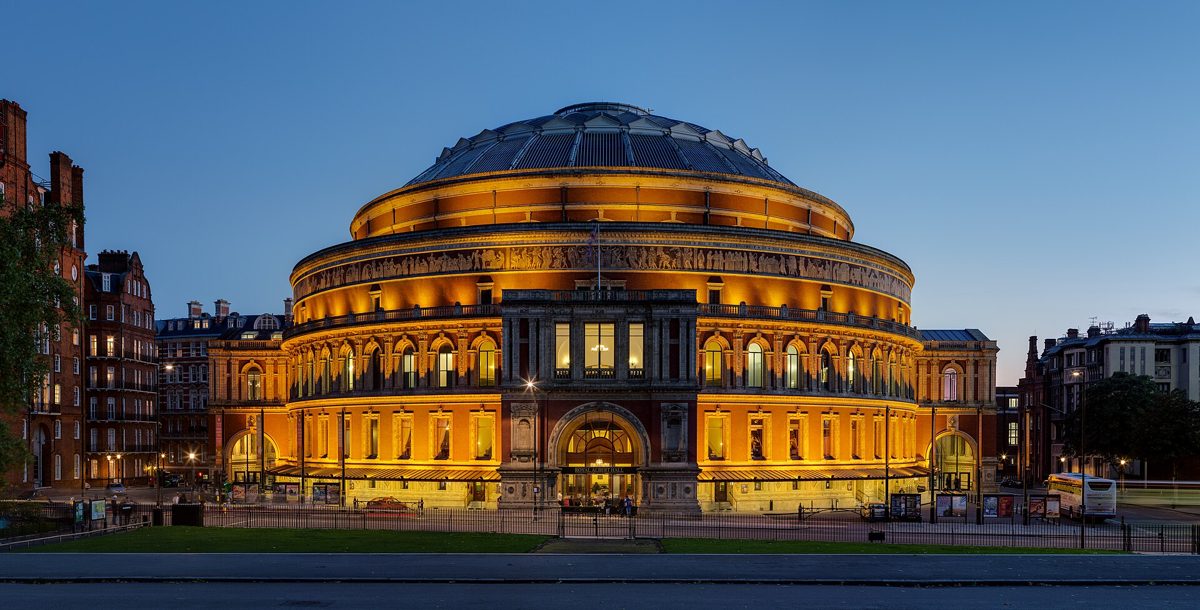
London's concert life is built on distinct institutions, each with a clearly defined personality. You choose your venue as carefully as you choose your programme. The Royal Albert Hall is the grand democratic spectacle, the Royal Opera House is high theatrical craft, Wigmore Hall is the private conversation. Knowing what each one stands for turns a casual ticket into a genuine listening strategy.
Royal Albert Hall and the BBC Proms
The Royal Albert Hall is not a subtle space. It is a vast oval bowl seating over 5,000 people, opened in 1871 and named for Queen Victoria's consort. Its size means that orchestral sound arrives with a generous, reverberant bloom rather than pinpoint clarity. The hall stands for the public event, the big statement, the moment when music becomes a shared civic ritual.
Programming spans everything from visiting international orchestras to film music with live score, but the heart of the institution is the BBC Proms. Running annually from mid-July to mid-September, the Proms is an eight-week festival of daily concerts, most of them in the Albert Hall. The season culminates in the Last Night, a flag-waving, rule-breaking British institution that is equal parts concert and carnival. The 2023 season, for instance, included a complete cycle of Rachmaninov's piano concertos with soloist Yuja Wang and a memorable performance of Berlioz's Les Troyens under Antonio Pappano.
The practical listening note concerns the Arena. This is the standing area directly in front of the stage, where you can buy a ticket on the door for a small sum, typically around £8. The sound here is immediate and thrilling, with far more presence than in many seated areas. Standing for two hours is the trade-off, and it is worth it. For seated tickets, avoid the side stalls directly under the overhang, where the orchestra sounds distant and boxed in. The Gallery at the very top offers a surprisingly clear, if distant, acoustic and costs less than the stalls.
Royal Opera House
The Royal Opera House in Covent Garden is the home of two resident companies: The Royal Opera and The Royal Ballet. The current building, opened in 1858 and extensively redeveloped in the 1990s, is a working theatre of the grand European tradition. This is where you go for fully staged lyric theatre with full orchestra, chorus, and production design operating at the highest international level.
Expect a core repertoire of Verdi, Puccini, Mozart, and Wagner, alongside 20th-century staples such as Britten and Janáček, plus a carefully chosen new commission each season. The 2024/25 season features a new production of Wagner's Die Walküre directed by Barrie Kosky with Antonio Pappano conducting, alongside revivals of Puccini's Tosca and Mozart's The Magic Flute. The Royal Opera shares the house with the Royal Ballet, so the calendar alternates between opera and ballet blocks. Cast lists draw from the top singers working today: the house has hosted everyone from Maria Callas to Jonas Kaufmann, and recent seasons have seen Lise Davidsen, Asmik Grigorian, and Javier Camarena.
The practical note is about the amphitheatre, the highest seating tier. The sound here is remarkably good, clear and well-balanced, because the auditorium is designed as a classic horseshoe shape that focuses sound upward. The trade-off is a steep rake and a distant view. If you want to hear the voices in detail without spending heavily, the upper slips and amphitheatre rearmost rows deliver honest, uncoloured sound. Bring opera glasses for the stage, and book early: the cheap amphitheatre seats for a hot ticket like a new Traviata can disappear within hours of public booking opening.
Barbican Centre
The Barbican is the London home of the London Symphony Orchestra and the BBC Symphony Orchestra, plus a busy programme of visiting ensembles and a strong contemporary music strand. It is a Brutalist complex in the City of London, opened in 1982, with a main concert hall that seats just under 2,000.
The Barbican stands for serious, curated listening. The LSO's artistic identity under chief conductors like Simon Rattle and now Antonio Pappano has leaned into the big symphonic repertoire: Mahler, Shostakovich, Elgar, Sibelius. Pappano's inaugural season in 2024/25 includes a complete Mahler symphony cycle, a focus on British composer Thomas Adès, and a Barbican residency by the pianist Víkingur Ólafsson. The BBC Symphony Orchestra shares the hall and brings a broader mix, often with a contemporary work and a core classical symphony. The Barbican also programmes a steady stream of chamber music, jazz, world music, and experimental electronics in its smaller spaces.
The practical note concerns the hall's acoustic reputation. The Barbican has been criticised for a dry, unflattering sound. The reality is more nuanced. Sit in the stalls, ideally somewhere between row H and row P. The sound here has warmth and definition. Avoid the rear of the circle, where the overhang traps the upper frequencies. The hall rewards close proximity to the stage. For specific concerts, the LSO's website often indicates which sections offer the best sound for the evening's programme.
Southbank Centre (Royal Festival Hall)
The Royal Festival Hall is the centrepiece of the Southbank Centre complex on the Thames, opened in 1951 for the Festival of Britain. It is the residence of the London Philharmonic Orchestra, the Philharmonia Orchestra, the Orchestra of the Age of Enlightenment, and the London Sinfonietta. No other London venue houses this many permanent artistic organisations under one roof.
The programming reflects this multiplicity. The LPO and Philharmonia cover the symphonic mainstream; the OAE performs on period instruments; the Sinfonietta specialises in 20th and 21st century music. The Southbank Centre also runs the year-round International Piano Series and a strong chamber music season in the smaller Queen Elizabeth Hall and Purcell Room. The 2024/25 orchestral season includes the Philharmonia under Santtu-Matias Rouvali performing a complete Sibelius cycle, and the LPO under Edward Gardner tackling Elgar's The Dream of Gerontius.
The practical listening note: the Royal Festival Hall underwent a major acoustic refurbishment in 2007, which added warmth and reduced the original dryness. The best sound is in the front to mid stalls and the front of the balcony. Avoid the rear stalls under the balcony overhang, where the sound can feel compressed. The hall's clarity is excellent; you will hear inner detail that disappears in softer venues. For piano recitals, the front half of the stalls gives you a direct, present sound that captures the full dynamic range of the instrument.
Wigmore Hall
Wigmore Hall is the most intimate of the major London venues, seating just 545 people. Opened in 1901 as Bechstein Hall, it was built by the German piano manufacturer and retains an Edwardian interior of warm wood, a domed ceiling, and a small raised stage. It is the undisputed home of song and chamber music in Britain.
The programming is tightly defined: solo piano recitals, string quartets, piano trios, and art song. Wigmore Hall runs its own series of concerts throughout the year, and the standard is relentlessly high. This is where you hear pianist András Schiff in a late Schubert sonata, or baritone Benjamin Appl building a whole programme around a single poet. The hall also runs a major competition, the Wigmore Hall International Song Competition, and broadcasts much of its season on BBC Radio 3. Recent highlights include a complete Beethoven string quartet cycle from the Elias Quartet and a series of lunchtime concerts featuring the pianist Paul Lewis exploring Schubert's late works.
The practical listening note is about position. The hall is small enough that every seat feels close. The acoustics are warm, clear, and remarkably even throughout. The best seats for piano recitals are in the central section, a few rows back, where the instrument's tone has time to blend. For song recitals, sit slightly off-centre so you can see the pianist's hands and the singer's face in profile. The balcony, if you can get a front-row seat, gives a lovely overhead perspective on string quartets.
St Martin-in-the-Fields
St Martin-in-the-Fields is an active Anglican church on Trafalgar Square, designed by James Gibbs and completed in 1726. It is not a dedicated concert hall, and that is exactly the point. The programming here is built around the church's own resident ensembles, notably the Academy of St Martin in the Fields, the orchestra Neville Marriner founded here in 1958.
Concerts happen year-round, often in the evening after the church closes for worship. The core repertoire is Baroque and Classical, much of it performed by the Academy or by visiting period-instrument groups. You will also find a regular series of candlelit concerts that lean toward accessible favourites: Vivaldi's Four Seasons, Mozart's Requiem, Bach Brandenburg concertos. The atmosphere is informal compared to the major halls; you are sitting in a working church, surrounded by light and space. The candlelit series is particularly popular with visitors and first-time concertgoers, running multiple nights each week.
The practical listening note: the church's stone interior creates a generous natural resonance. This flatters string sound beautifully but can turn a full orchestra into a blur. Sit in the nave, no more than halfway back. The front rows give you clarity and presence; the rear rows lose detail to the echo. For a candlelit concert, the visual pleasure of the lit space is part of the experience, so choose a seat with a clear view of the altar.
Venue comparison at a glance
Here is a quick breakdown of what each venue offers and who it suits best: Royal Albert Hall Size: 5,000+ seats. Best for: big symphonic statements, the Proms festival, the democratic experience of standing in the Arena. Avoid: side stalls under the overhang. Ideal for: first-timers who want spectacle and a relaxed atmosphere. Royal Opera House Size: 2,256 seats. Best for: fully staged opera and ballet with world-class singers and production values. Avoid: nothing acoustically, but the amphitheatre is high and steep. Ideal for: anyone who wants the full theatrical experience of opera or ballet. Barbican Centre Size: 1,943 seats. Best for: serious symphonic programmes from the LSO and BBC Symphony Orchestra, plus contemporary music. Avoid: rear of the circle. Ideal for: experienced listeners who know the repertoire and want a focused, curated evening. Royal Festival Hall Size: 2,700 seats. Best for: symphonic mainstream from the LPO and Philharmonia, period-instrument performances, the International Piano Series. Avoid: rear stalls under the balcony. Ideal for: listeners who want choice (multiple orchestras, varied programming) under one roof. Wigmore Hall Size: 545 seats. Best for: solo piano recitals, string quartets, and art song in an intimate acoustic. Avoid: nowhere, the hall is consistently good. Ideal for: chamber music lovers and anyone who wants to hear music up close in a warm, concentrated setting. St Martin-in-the-Fields Size: roughly 800 seats in nave configuration. Best for: Baroque and Classical repertoire by candlelight in a historic church. Avoid: the rear of the nave, where resonance blurs detail. Ideal for: tourists, casual listeners, and anyone who wants an atmospheric evening without the formality of a concert hall.
Frequently asked questions
How far in advance should I book tickets?
It depends on the venue and the event. The Royal Opera House opens its season bookings months ahead, and the most sought-after casts sell out quickly, though returns often appear a few days before the performance. Wigmore Hall concerts can sell out weeks in advance for a major artist like András Schiff or a quartet like the Takács. The Proms sell standing tickets on the day, but seated tickets for the biggest nights go in advance. For the Barbican and Southbank Centre, you can often find good seats a week or two before most concerts, except when a star soloist or conductor is on the bill.
What should I wear to a classical concert in London?
There is no dress code at any of these venues. At the Royal Opera House you will see a mix of formal evening dress and ordinary street clothes, especially in the amphitheatre. At Wigmore Hall and the Barbican, the audience dresses comfortably, with many people arriving straight from work. The Proms at the Royal Albert Hall is the most relaxed of all: shorts and a t-shirt are perfectly normal in the arena. Wear what allows you to sit still and listen for two hours without distraction.
Which venue is best for someone who has never been to a classical concert?
Start with the Royal Albert Hall during the Proms season. The atmosphere is welcoming, the tickets are affordable if you stand in the arena, and the programme notes are designed for a broad audience. The acoustic is forgiving, the visual spectacle of a full hall is memorable, and you can leave between pieces if you find a particular work not to your taste. Wigmore Hall is ideal if you prefer a small, quiet space and want to hear a single pianist or a small group up close. St Martin-in-the-Fields offers candlelit concerts that feel more like an event than a formal concert, and the programme is full of familiar works.
How do I get cheap tickets?
Several strategies work across London venues. The Royal Opera House runs a Friday Rush scheme, releasing a limited number of cheap seats online every Friday at 1pm for the following week's performances. The Barbican and Southbank Centre offer discounted tickets for students and under-30s through their membership schemes. The Royal Albert Hall sells Arena standing tickets on the door for £8 during the Proms. Wigmore Hall has a limited number of £5 tickets for under-35s, bookable in advance. St Martin-in-the-Fields candlelit concerts are consistently affordable, with tickets often in the £15-£35 range. Sign up to each venue's email list, as flash sales and last-minute offers appear regularly.
Can I take children to these venues?
Yes, but with caveats. The Royal Albert Hall is the most child-friendly, with family concerts and relaxed Proms events designed for younger listeners. The Royal Opera House has specific family performances and ballets like The Nutcracker that welcome children, though standard evening operas request no children under 5. Wigmore Hall runs family concerts on weekends, and the atmosphere is small enough that children who can sit still will enjoy the proximity. St Martin-in-the-Fields candlelit concerts are accessible and short enough for older children. Check the venue's age policy before booking, as restrictions vary.
This is an independent member's guide compiled by London BGTC Society. We are not affiliated with the venues and institutions mentioned; opening arrangements and programmes change - always confirm details on the official websites before making plans.
← Back to Events