A cultural weekend in London - the member's itinerary
Two well-planned days of art, music, architecture and food in London - an itinerary built around real landmarks.
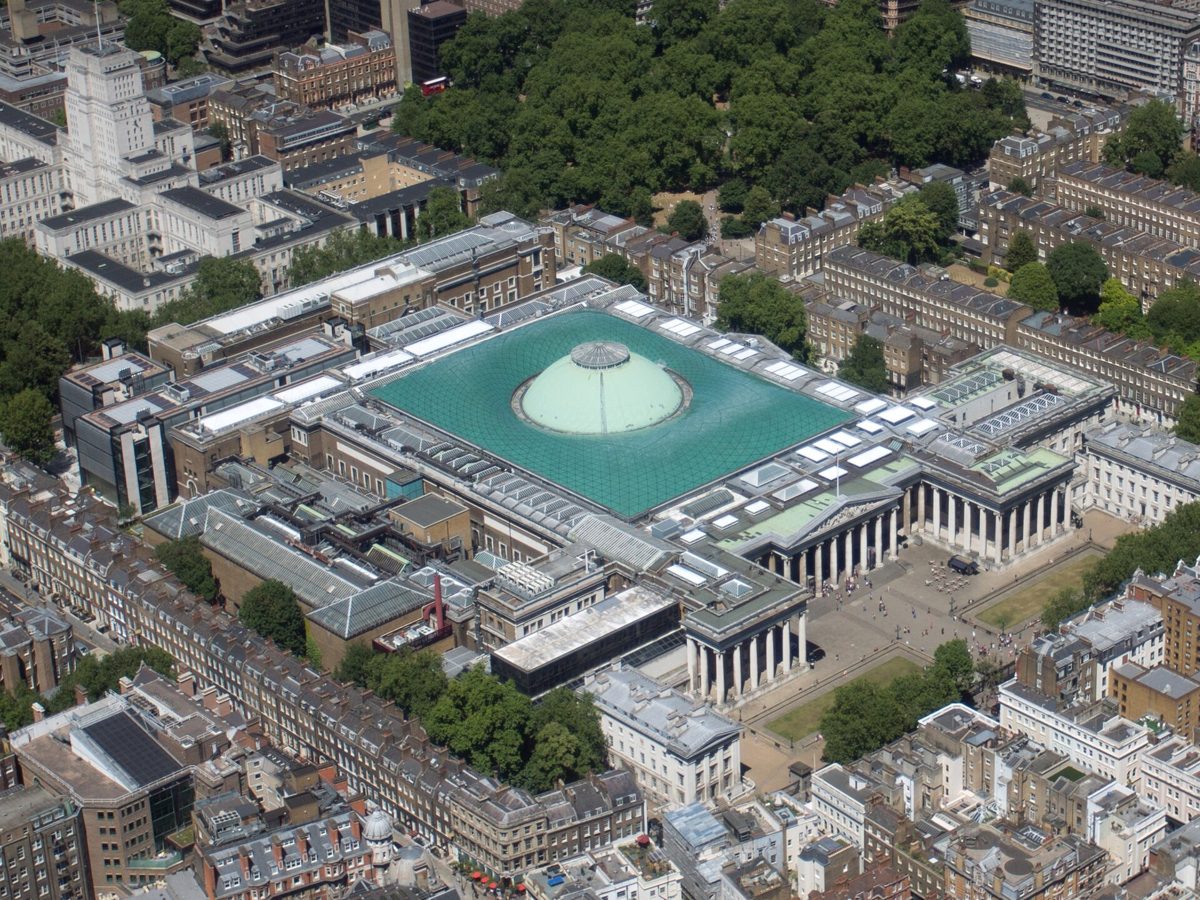
London doesn’t do half-measures when it comes to culture. The sheer concentration of world-class museums, galleries, performance spaces, and architectural landmarks means you can carve out a weekend that feels both sprawling and intimate. This itinerary assumes you want to cover serious ground without sprinting through it - you’ll hit the British Museum, Tate Modern, and the National Gallery, yes, but you’ll also find the connective tissue that makes a weekend feel like a proper Londoner’s cultural sweep. No temporary exhibitions required. No seasonal gimmicks. Just the permanent brilliance of the city, arranged so Saturday builds momentum and Sunday lands with a quieter, reflective grace.
Saturday morning - Bloomsbury’s Encyclopaedic Start and a Georgian Stroll
Begin at the British Museum in Bloomsbury. The Great Court, with its soaring glass-and-steel roof designed by Foster + Partners, is worth arriving for on its own - light pours in even on overcast mornings, and the scale recalibrates your sense of indoor public space. Head straight to the Rosetta Stone (Room 4) before the crowds thicken around it. The object itself is compact, almost modest, but its role in unlocking Egyptian hieroglyphs gives it a gravitational pull. From there, move to the Assyrian Lion Hunt reliefs (Room 10a) from Nineveh - the musculature of the dying lions, rendered in alabaster, remains one of the most visceral sequences in ancient art. The Parthenon Sculptures (Room 18) demand a slower circuit; the cavalry procession and reclining river god Ilissos reward close looking, and the controversy over their presence here is part of the experience whether you engage with it or not.
Don’t attempt the whole museum. Pick three or four rooms and leave with your attention intact. When you exit, you’re in Bloomsbury proper - a grid of Georgian squares laid out by the Russell family in the 17th and 18th centuries. Walk west through Russell Square, then cut up to Gordon Square and Tavistock Square, where Virginia Woolf, John Maynard Keynes, and the Bloomsbury Group lived and argued. A blue plaque on 46 Gordon Square marks Woolf’s residence from 1904 to 1907. The squares themselves are leafy, bench-dotted, and deliberately unfussy - a good place to process the museum before lunch.
Saturday afternoon - The South Bank’s Industrial Cathedral and Riverside Energy
Cross the river. The Tate Modern occupies the former Bankside Power Station, and the building’s industrial bones - the turbine hall, the brick façade, the switch house extension by Herzog & de Meuron - are as much a draw as the collection. The permanent collection is free and arranged thematically rather than chronologically, so you can walk from a Rothko room into a Beuys installation without the whiplash a traditional survey might cause. The Blavatnik Building’s viewing level on the 10th floor opens up a panorama that stretches from St Paul’s Cathedral to the Shard; it’s one of the best free views in the city and a useful orientation point.
After you’ve had your fill, step outside onto the Queen’s Walk. The South Bank is London’s most successful stretch of pedestrianised riverfront, and on a Saturday afternoon it hums with buskers, skateboarders grinding the undercroft of the Southbank Centre, and the general theatre of urban life. Walk east past Gabriel’s Wharf - a cluster of independent shops and food stalls - and continue toward Blackfriars Bridge. If you want a detour, the Oxo Tower Wharf has gallery spaces and design shops on its lower floors, though the real pleasure is simply watching the Thames from the public walkway, barges and clippers cutting against the current.
Saturday evening - Trafalgar Square, the National Gallery, and West End Theatre
As the afternoon tilts toward evening, make your way to Trafalgar Square. The National Gallery stays open late on Saturdays (until 9pm), which transforms a visit. The collection spans roughly 1250 to 1900, and the sequencing through Rooms 8–14 - the Italian Renaissance core - is a masterclass in pacing: Uccello’s Battle of San Romano, Piero della Francesca’s Baptism of Christ, and Titian’s Bacchus and Ariadne all sit within a few minutes’ walk of each other. The later rooms hold Velázquez’s Rokeby Venus, Turner’s The Fighting Temeraire, and Van Gogh’s Sunflowers. Evening light through the skylights alters the colour temperature of the paintings; a Constable landscape seen at 8pm feels different from one seen at noon.
After the gallery, you’re positioned perfectly for the West End. The Palace Theatre on Shaftesbury Avenue, the Sondheim Theatre (formerly the Queen’s) on Wardour Street, or the Gielgud Theatre on Shaftesbury Avenue are all within walking distance. Even if you haven’t booked ahead, the TKTS booth in Leicester Square sells discounted tickets for that evening’s performances. The point isn’t a specific show - it’s the ritual of filing into a velvet-seated auditorium designed by Matcham or Sprague, the overture cutting through pre-show chatter, and the shared suspension of disbelief that only a live audience generates. Post-theatre, walk through Covent Garden as the piazza empties out; the cobbles and the iron-and-glass market roof look best under streetlight.
Sunday morning - Hampstead’s Hilltop Calm and a Painter’s House
Sunday shifts the tempo. Head north to Hampstead Heath, Parliament Hill in particular. The view from the summit takes in the City cluster, Canary Wharf, and on clear days the North Downs. The heath itself is ancient common land - never enclosed, never built over - and the feeling of wildness within Zone 2 is genuine. Kenwood House, a neoclassical villa on the heath’s northern edge, holds a small but potent collection including a Rembrandt self-portrait and Vermeer’s The Guitar Player, all in rooms managed by English Heritage. Entry is free, and the library’s Robert Adam ceiling is a delicate counterpoint to the heath’s ruggedness.
From Kenwood, walk downhill through the heath’s wooded paths toward Hampstead Village. Flask Walk and Well Walk retain the village-scale architecture that predates London’s absorption of the area. Stop at 2 Willow Road in Hampstead - the modernist house Ernő Goldfinger designed for his own family in 1939, now National Trust. The interior is a time capsule of mid-century design: built-in furniture, surrealist paintings, and a helical staircase that compresses space ingeniously. Goldfinger’s reputation as a brutalist architect (Trellick Tower, Balfron Tower) softens when you see the domestic warmth he created for himself. Tours are limited, so book ahead, but even the exterior - a concrete-and-brick terrace facing the heath - is worth the detour.
Sunday afternoon - Marylebone’s Collector’s Eye and a Georgian Church
Come back into central London and aim for Marylebone. The Wallace Collection on Manchester Square occupies Hertford House, a townhouse mansion stuffed with 18th-century French painting, Sèvres porcelain, and armour that gleams under gallery lighting. Fragonard’s The Swing is here - a painting so culturally reproduced that seeing the original can feel like encountering a celebrity. The collection’s density is its charm; rooms unfold enfilade, and the café in the glass-roofed courtyard is one of the prettiest museum refreshment spots in London.
A short walk north brings you to St Marylebone Parish Church on Marylebone Road, completed in 1817. Robert Browning and Elizabeth Barrett married here in secret in 1846, and the church’s interior - galleried, light-filled, with a gilded organ case - is a fine example of Regency church architecture. The churchyard contains a memorial garden that’s surprisingly quiet given the traffic roaring past on the Euston Road.
From here, you can drift into Regent’s Park if the weather holds. Queen Mary’s Gardens within the park are planted with tens of thousands of roses, and the Inner Circle’s formal layout recalls John Nash’s original vision for this part of the city. If you prefer an indoor finale, Daunt Books on Marylebone High Street is an Edwardian travel bookshop with a long oak gallery and skylight - a place where browsing feels appropriately ceremonial for the end of a cultural weekend.
Frequently asked questions
Can I really visit the British Museum, Tate Modern, and National Gallery in one weekend without feeling rushed?
Yes, if you treat each as a curated hit rather than an exhaustive survey. The British Museum rewards a focused route through three or four key rooms; Tate Modern’s thematic layout lets you sample across periods without walking miles of corridor; and the National Gallery’s late Saturday opening means you can visit when the crowds have thinned and the atmosphere is more contemplative. The itinerary builds in transitions - walks, squares, riverfront stretches - that give your attention time to reset between institutions.
Do I need to book anything in advance?
Some elements benefit from advance booking: the viewing level at Tate Modern’s Blavatnik Building can be reserved, and 2 Willow Road in Hampstead operates timed tours that sell out. Theatre tickets are cheaper and more reliably available if booked ahead, though the TKTS booth in Leicester Square is a reliable same-day fallback. The major museums and galleries are free and walk-up accessible, which is the great structural advantage of a cultural weekend in London - the core experience doesn’t depend on pre-planning.
What if the weather is bad?
London’s cultural infrastructure is unusually weatherproof. The British Museum, National Gallery, Tate Modern, Wallace Collection, and Kenwood House are all indoor spaces with substantial collections. The South Bank walk can be truncated by ducking into the Southbank Centre or BFI Southbank. Hampstead Heath in rain has its own appeal - mist on Parliament Hill, the woods dripping - but you can substitute a visit to the
This is an independent member's guide compiled by the London BGTC Society. We are not affiliated with the venues and institutions mentioned; opening arrangements and programmes change - always confirm details on the official websites before making plans.
← Back to Events