Literary London - bookshops, libraries and reading rooms worth your time
Independent bookshops, historic libraries and reading spots of London: a literary walking companion for members.
London wears its literary history like an old overcoat - comfortably, unpretentiously, and with pockets full of stories. Walk any street in Bloomsbury, Hampstead or Southwark and you tread on ground where Virginia Woolf argued with publishers, where Dickens found his villains, and where Shakespeare’s contemporaries gathered to drink and scheme. This guide is not a list of every bookish corner in the capital. It is a curated walk through places you can visit today - real bookshops, historic libraries, and museums whose walls hold more than paintings - each with a genuine literary heartbeat.
The British Museum - The Reading Room That Shaped Minds
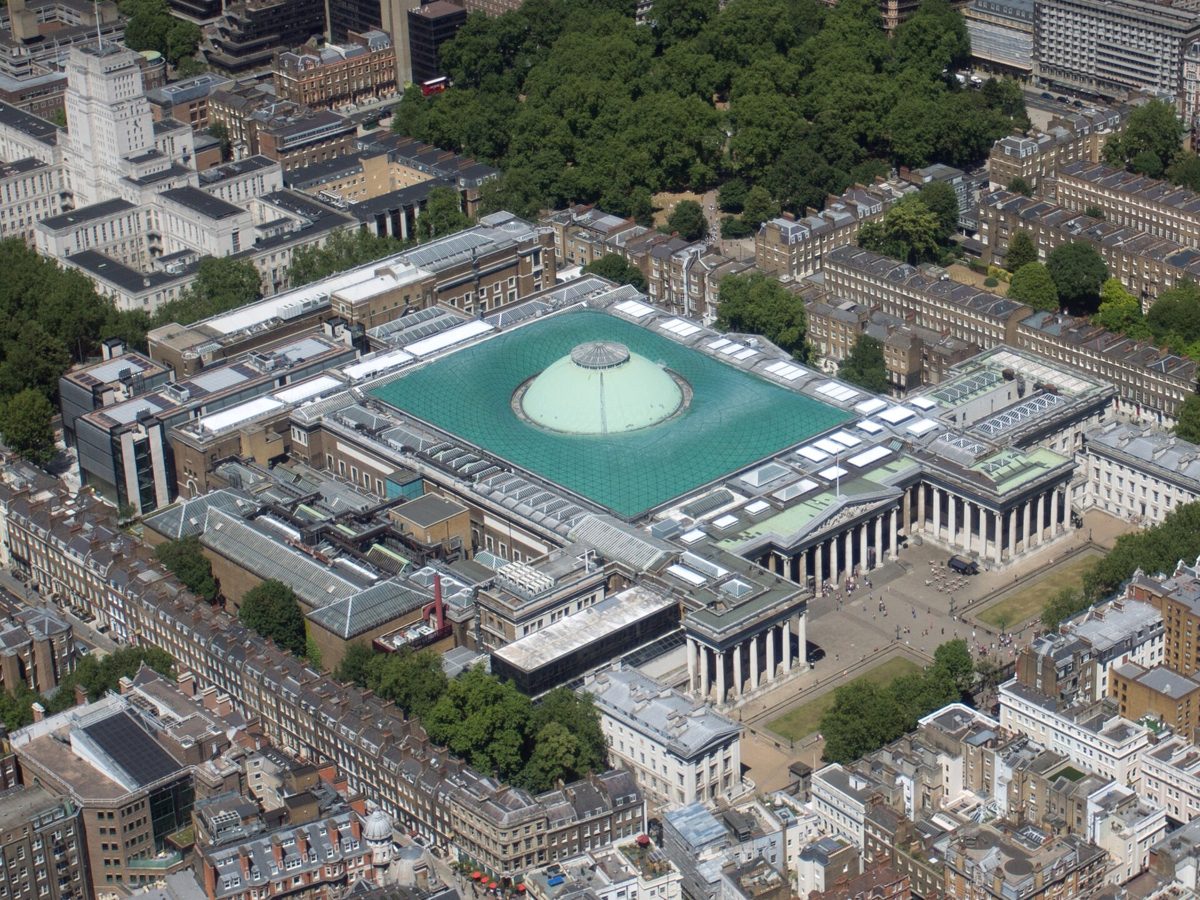
The British Museum in Bloomsbury is known globally for the Rosetta Stone and the Elgin Marbles, but its literary significance runs deeper than most visitors realise. At the heart of the museum sits the Round Reading Room, a domed cathedral of knowledge completed in 1857. This was not a lending library but a sanctuary for serious research, and its alumni list reads like a roll call of modern English literature.
Karl Marx researched and wrote much of Das Kapital here, occupying seat number L13 day after day. George Bernard Shaw credited the Reading Room with his education, claiming he learned more there than at school. Virginia Woolf described it in A Room of One’s Own as a space where women had to fight for intellectual admission. Arthur Conan Doyle, Bram Stoker, Oscar Wilde and H.G. Wells all held tickets. The room’s circular design, with its radiating desks and vast catalogue system, became a symbol of Victorian intellectual ambition. Today the space functions as a major exhibition gallery, but you can stand under that dome and feel the ghostly concentration of a century of writers thinking hard.
Hatchards - London’s Oldest Bookshop
At 187 Piccadilly, a five-minute walk from Piccadilly Circus, stands Hatchards, a bookshop that has traded continuously since 1797. The building is a narrow, five-storey Georgian townhouse with creaking wooden floors and a royal warrant on the wall. It is not a museum piece - it is a functioning, serious bookshop with a particularly strong selection of signed first editions, history and biography.
Hatchards’ literary pedigree is unmatched. Oscar Wilde bought books here. Lord Byron was a customer. G.K. Chesterton browsed the shelves. The shop has hosted signings by virtually every major British author of the twentieth century, from Graham Greene to P.D. James. During the Second World War, the staff famously carried books down to the basement during air raids and continued selling. The ground floor displays new fiction and non-fiction on tables curated with genuine discernment; upstairs, the quiet rooms feel like a private library. The shop’s royal connections - it holds warrants from the Queen, the late Duke of Edinburgh and the Prince of Wales - add a layer of establishment glamour, but the real magic is the sense that serious readers have always come here.
Daunt Books Marylebone - The Traveller’s Cathedral
Daunt Books on Marylebone High Street is the most architecturally beautiful bookshop in London. Opened in 1912, it occupies a former Edwardian bookshop built specifically for the trade, with long oak galleries, skylights and a stained-glass window. The shop’s defining feature is its geographical organisation: fiction and non-fiction are shelved by country, not by genre. A section labelled “France” will contain Flaubert, Julian Barnes, cookbooks on Provençal cuisine and histories of the Revolution all standing together.
This system was the brainchild of James Daunt, who took over the struggling shop in 1990 and transformed it into a model of independent bookselling. The travel literature section is the finest in the city. Bruce Chatwin, Patrick Leigh Fermor and Jan Morris dominate the shelves, but you will also find contemporary writers like Colin Thubron and Kapka Kassabova. The atmosphere is hushed and deliberate. People whisper here as though in a chapel, which in a sense they are - a chapel dedicated to the idea that books are the best way to travel before you pack a suitcase.
The London Library - A Writer’s Refuge in St James’s Square
Founded in 1841 by Thomas Carlyle, who was infuriated by the restrictions of the British Museum Reading Room, the London Library remains the single most important lending library for working writers in Britain. It is a private subscription library, but membership is open to anyone willing to pay the annual fee, and the stacks are famously generous - members can borrow up to forty books at a time and keep them indefinitely.
The collection holds over a million volumes on open shelves, arranged by subject with a wonderfully eccentric classification system devised by the library’s early Victorian founders. Books acquired in 1850 sit next to books acquired in 2023. The library has counted among its members Charles Dickens, George Eliot, T.S. Eliot (who served as president from 1952 to 1965), Virginia Woolf, E.M. Forster and Agatha Christie. More recently, Kazuo Ishiguro, Hilary Mantel and Tom Stoppard have all written major works while members. The building on St James’s Square is a warren of iron walkways, spiral staircases and reading rooms where the only sound is the turning of pages. It smells of old paper and floor polish. There is no better place in London to understand the working habits of writers who need silence, serendipity and the physical presence of books.
Shakespeare’s Globe and Southwark’s Bookish Quarter
The reconstructed Globe Theatre on Bankside is a working Elizabethan playhouse built a few hundred metres from the site of the original. It is a literary landmark in the most direct sense: this is where Shakespeare’s company, the Lord Chamberlain’s Men, staged Hamlet, Othello, King Lear and Macbeth for the first time. The modern Globe, driven into existence by the American actor Sam Wanamaker, opened in 1997 and runs performances from April to October, with groundlings still standing in the yard as they did four centuries ago.
But Southwark’s literary geography extends beyond the Globe. A short walk away on Borough High Street stands the George Inn, the last surviving galleried coaching inn in London, mentioned by Dickens in Little Dorrit and frequented by Chaucer’s pilgrims on their way to Canterbury. Nearby, Southwark Cathedral contains a monument to Shakespeare and a stained-glass window depicting scenes from his plays. The area around Clink Street and Winchester Palace evokes the rough, vivid London of Elizabethan pamphleteers and playwrights - a district of bear-baiting pits, taverns and printing houses where the modern entertainment industry was born.
The National Gallery and Tate Modern - Art That Taught Writers to See
Two of London’s great art museums belong in a literary guide because they are places where writers have learned to look, and where specific paintings have sparked specific works of literature.
At the National Gallery in Trafalgar Square, the permanent collection is threaded through English letters. E.M. Forster sent his characters in Howards End to look at Piero della Francesca. Virginia Woolf wrote about the gallery in her diaries and essays, using paintings as prompts for thinking about consciousness and time. The gallery’s Turner collection influenced generations of Romantic and Victorian poets. More recently, Tracy Chevalier’s Girl with a Pearl Earring - though the painting itself lives in The Hague - belongs to a tradition of novelists responding to visual art that the National Gallery has nurtured through its public programmes and its quiet, light-filled rooms. Stand before Rembrandt’s late self-portraits or Uccello’s The Battle of San Romano and you stand where writers have stood, puzzling over colour and narrative.
Tate Modern, housed in the former Bankside Power Station, is younger but no less significant. Its Turbine Hall commissions have directly engaged writers: the artist Olafur Eliasson’s The Weather Project (2003) prompted essays by novelists and poets attempting to describe a room filled with artificial sun. Tate Modern’s location places it directly across the river from St Paul’s Cathedral, a geographical relationship that has drawn comparisons with the Globe Theatre’s proximity to the church in Shakespeare’s time - the sacred and the secular in permanent, productive tension. The gallery’s collection of surrealist and modernist work connects visually to the experimental writing of the same period. Seeing a Max Ernst or a Leonora Carrington painting here makes the literary avant-garde feel tactile.
Persephone Books - A Publisher’s Shop in Bloomsbury
At 59 Lamb’s Conduit Street, a short walk from the British Museum, Persephone Books is both a bookshop and a publishing house, dedicated to reprinting neglected fiction and non-fiction by women, mostly from the mid-twentieth century. The shop is small, painted dove-grey, with shelves displaying the publisher’s distinctive uniform editions: elegant paperbacks with patterned endpapers drawn from period fabric designs.
Founded by Nicola Beauman in 1999, Persephone has rescued over 140 titles from obscurity, including works by Dorothy Whipple, Mollie Panter-Downes and Frances Hodgson Burnett’s adult novels. The shop functions as both a retail space and an office - customers browse while staff pack orders at a back desk. The atmosphere is distinctly Bloomsbury, in the literal and spiritual sense: intellectual, quietly feminist, devoted to the idea that good books deserve a second chance. The street itself, Lamb’s Conduit Street, is one of London’s most charming independent shopping thoroughfares, and the shop’s presence anchors it as a destination for readers who prefer discovery to bestseller lists.
Frequently asked questions
Question: Can I visit the British Museum Reading Room without a special ticket?
The Round Reading Room is now used as a major exhibition space and is generally open to all museum visitors when an exhibition is on display there. Even when it houses a ticketed exhibition, you can often glimpse the interior from the museum’s Great Court. The desks where Marx and Woolf worked are no longer in public use, but the architectural splendour of the dome is fully visible.
Question: Is the London Library open to tourists, or only to members?
The London Library offers guided tours to non-members on certain days, which can be booked in advance through their website. Casual drop-in browsing is not permitted - it remains a working library for members. But the tours are excellent, led by knowledgeable staff who show you the reading rooms, the stacks and the historic founders’ room.
Question: Which of these bookshops is best for finding rare or signed editions?
Hatchards on Piccadilly carries a strong and regularly refreshed stock of signed first editions, particularly of contemporary British fiction and political biography. For older or genuinely rare books, you would need to visit the antiquarian dealers on Cecil Court off Charing Cross Road - a short, pedestrianised street of specialist bookshops that deserves its own guide.
This is an independent member's guide compiled by the London BGTC Society. We are not affiliated with the venues and institutions mentioned; opening arrangements and programmes change - always confirm details on the official websites before making plans.
← Back to Events