The best museums and galleries of London - a member's guide
A curated member's guide to London's essential museums and galleries - what to see, when to go and what locals skip.
London’s institutional collections are so dense that even long-term residents can spend years without seeing half of what matters. This guide selects seven venues that repay repeat visits, not because they are famous but because their holdings have genuine depth. Every institution listed here is free to enter for core collections, though special exhibitions usually require paid tickets. Quieter times follow a rough pattern: weekday mornings soon after opening, and Friday late openings where available. Avoid school holidays and the first hour after opening on weekends if you want room to breathe.
British Museum
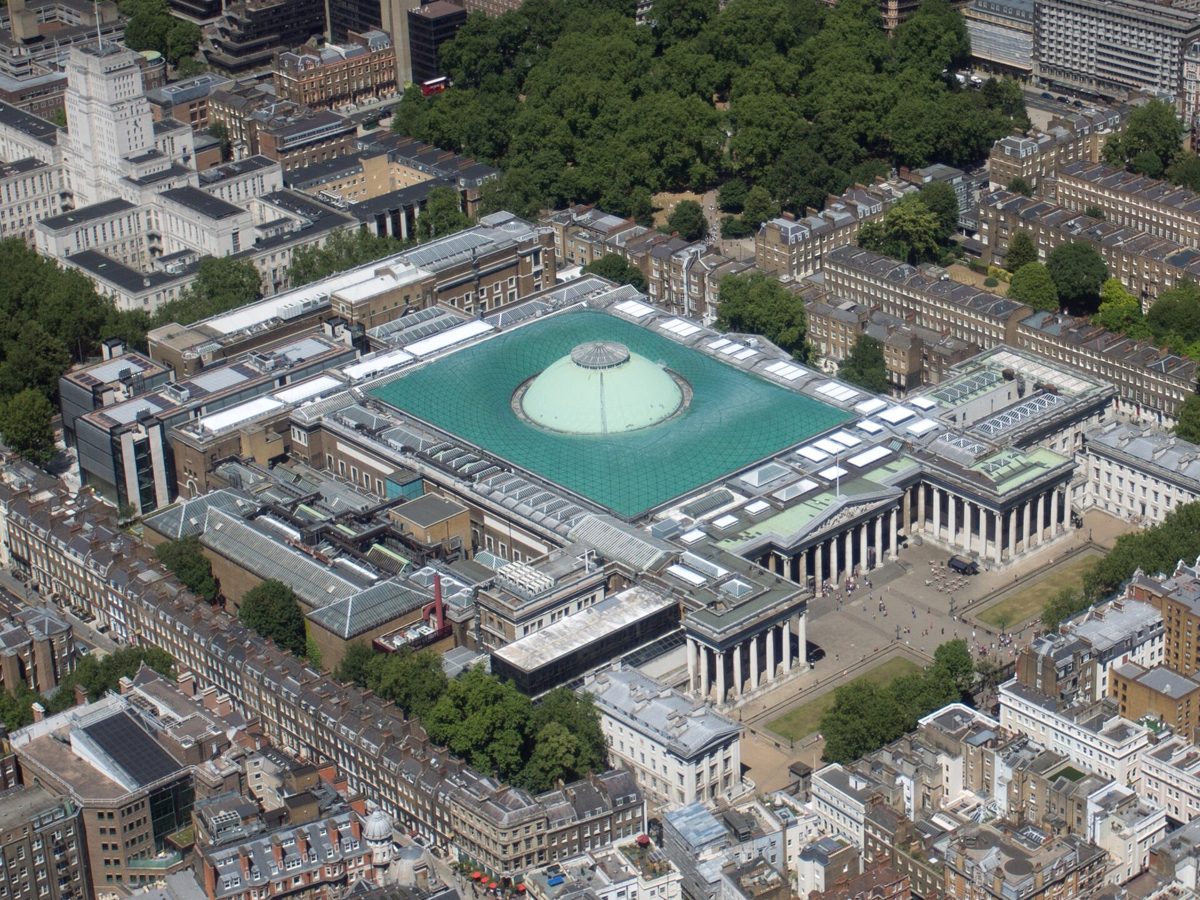
The British Museum is the unavoidable starting point, and for good reason. Its strongest suit is the material culture of the ancient world, displayed at a scale no other institution can match. The Egyptian sculpture gallery alone - home to the Rosetta Stone and colossal figures of Ramesses II - would justify a visit. Equally formidable are the Assyrian reliefs from Nimrud and Nineveh, which read like stone comics of lion hunts and siege warfare, and the Parthenon sculptures, whose legal status remains contested but whose artistic importance is settled.
Beyond the headline antiquities, the museum holds quieter collections that reward curiosity. The Sainsbury African Galleries, basement-level and often uncrowded, contain Benin bronzes and a comprehensive textile collection. The Enlightenment Gallery (Room 1) functions as a museum of the museum itself, recreating an eighteenth-century cabinet of curiosities. The Prints and Drawings study room requires an appointment but gives access to works by Dürer, Rembrandt, and Goya that rarely see public display.
Practical notes: the Great Court entrance off Russell Street handles crowds better than the Montague Place side door. Mid-afternoon Tuesday through Thursday is consistently calmer than any weekend slot. The reading room dome is visible from the Great Court but the room itself opens only for occasional tours - check the website before assuming access.
National Gallery
The National Gallery holds Western European painting from roughly 1250 to 1900, and its collection strategy means you can trace entire lineages: Italian Renaissance, Dutch Golden Age, French Impressionism, British portraiture. Unlike encyclopedic museums that display a few token masterpieces per school, the National Gallery lets you see how painters argued with each other across centuries. The Sainsbury Wing’s early Italian rooms place Duccio, Giotto, and Piero della Francesca in sequence; the central galleries pit Titian against Veronese and Tintoretto; Room 34 alone contains seven Turner paintings, including the late, nearly abstract Rain, Steam and Speed.
The collection’s particular strength is seventeenth-century Dutch painting. Vermeer’s two paintings here - A Young Woman Standing at a Virginal and A Young Woman Seated at a Virginal - hang alongside Pieter de Hooch, Gabriel Metsu, and Jan Steen, making the case for Vermeer as part of a broader Delft School rather than an isolated genius. Rembrandt’s late self-portraits, painted when his reputation had collapsed and his face had grown unsparingly heavy, are among the most psychologically exposed works in London.
Visit midweek after 2 p.m., when morning tour groups have dispersed. Friday evenings until 9 p.m. draw a younger crowd and the galleries feel less rushed. The ground-floor Espresso Bar near the Getty Entrance is a functional meeting point; the National Dining Rooms on level one, run by Peyton and Byrne, serve a proper lunch if you are making a day of it.
Tate Modern
Tate Modern’s permanent collection covers international modern and contemporary art from around 1900 onward, housed in a converted Bankside power station. The Turbine Hall installations - commissioned annually and free - have included Olafur Eliasson’s The Weather Project (2003) and Kara Walker’s Fons Americanus (2019), and remain the gallery’s most visible public gesture. The collection itself lives on levels two and four, organised thematically rather than chronologically since the 2016 rehang.
Key holdings include a deep surrealist room with Dalí, Miró, and Leonora Carrington; a strong representation of post-war abstraction (Rothko’s Seagram murals occupy their own meditative space); and the ARTIST ROOMS on level two, which rotate focused displays of single figures - Louise Bourgeois, Agnes Martin, Joseph Beuys. Tate’s commitment to Eastern European and Latin American modernism, often underrepresented in Western institutions, shows in works by Magdalena Abakanowicz, Hélio Oiticica, and Lygia Clark.
The Natalie Bell building (formerly Blavatnik) on level four is where you find the heavyweight contemporary names: Lubaina Himid, Steve McQueen, Doris Salcedo. The viewing terrace on level ten of the same building is free and gives a useful panorama of the City and St Paul’s without the Shard’s ticket barrier. Weekday mornings, particularly Tuesday, offer the emptiest galleries. The riverside entrance queues less than the main Turbine Hall doors on busy Saturdays.
Victoria and Albert Museum
The V&A is the world’s largest museum of decorative arts and design, and its range is so broad that it helps to choose one or two departments per visit rather than attempting comprehensiveness. The Cast Courts - two vast halls filled with plaster reproductions of architectural and sculptural monuments, including a full-scale Trajan’s Column split in two to fit under the ceiling - are a Victorian oddity that has aged into something genuinely strange and affecting. The jewellery gallery, recently refurbished, traces personal adornment from ancient goldwork to contemporary studio pieces, with cases organised so you can see the backs of brooches and the clasps of necklaces, details most museums hide.
The fashion collection, the national collection of dress, runs from seventeenth-century mantuas to Alexander McQueen, and the rotating temporary displays are curated with scholarly rigour. The South Asia galleries contain Tipu’s Tiger - the near-life-size wooden automaton of a tiger mauling a British soldier, complete with organ pipes simulating growls and screams - alongside Mughal jade and Company School painting. The Photography Centre, expanded in 2023, now gives the V&A’s holdings of Julia Margaret Cameron, Cartier-Bresson, and contemporary practitioners the dedicated space they have long needed.
The museum’s internal courtyard garden, with its shallow pool and café tables, functions as a genuine oasis on summer afternoons. Wednesday mornings are reliably quiet; the Friday late opening until 10 p.m. includes music and bars in the central rotunda. Entry is free, though the building’s labyrinthine layout means the paper map (£1 suggested donation) is worth acquiring.
Wallace Collection
The Wallace Collection occupies Hertford House on Manchester Square, a short walk from Bond Street, and it is the most concentrated assembly of eighteenth-century French art outside France. The collection was assembled by generations of the Seymour-Conway family - marquesses of Hertford and Sir Richard Wallace - and bequeathed to the nation in 1897 on the condition that nothing be lent or rearranged. The result is a time capsule: rooms hung floor-to-ceiling with paintings, furniture, porcelain, and arms in the dense style of a private palace.
The star holdings are works by François Boucher, Jean-Honoré Fragonard (The Swing is here, smaller than reproductions suggest and all the better for it), and Jean-Antoine Watteau. The collection of Sèvres porcelain is probably the finest in Britain. The arms and armour galleries, occupying the ground floor’s eastern wing, contain Ottoman, Mughal, and European weaponry displayed with more aesthetic consideration than most military museums manage. Frans Hals’s The Laughing Cavalier hangs in the Great Gallery, its expression more ambiguous than the title implies.
The Wallace is free and consistently less crowded than the major Kensington museums. The covered courtyard restaurant, with its glass roof and pink banquettes, is a sensible lunch spot. Mid-afternoon on Thursdays and Fridays is particularly tranquil. The museum’s small scale - you can see the highlights in two hours - makes it ideal for a focused visit rather than an endurance test.
Sir John Soane’s Museum
Sir John Soane’s Museum is the preserved home and office of the Georgian architect who designed the Bank of England and Dulwich Picture Gallery. Soane obtained a private Act of Parliament to leave his house at Lincoln’s Inn Fields intact after his death, and the result is the most eccentric and personal museum in London. Every surface is layered: paintings fold out from false walls, mirrors reflect objects you cannot otherwise see, and the basement-level sarcophagus of Seti I - carved from a single block of alabaster - sits in a sepulchral chamber lit from above.
The Picture Room contains Hogarth’s A Rake’s Progress and An Election series, displayed behind movable panels that Soane designed to double the hanging space. Canaletto, Turner, and Piranesi drawings fill cases and cabinets. The Model Room holds Soane’s cork and plaster architectural models, including a detailed reconstruction of Pompeii. The collection is not large - the house has only about a dozen rooms open to visitors - but the density of objects and Soane’s theatrical manipulation of light and space make it feel inexhaustible.
Entry is free but capacity is strictly limited; arrive ten minutes before opening (10 a.m., Wednesday through Sunday) or book an afternoon slot online. The first Tuesday evening of each month offers a candlelit opening that is worth planning around. Photography is permitted without flash. The museum’s no-bag policy inside the house is enforced - use the cloakroom or travel light.
Design Museum
The Design Museum relocated to the former Commonwealth Institute building on Kensington High Street in 2016, and its permanent collection, Designer Maker User, is a free entry point to understanding how industrial and graphic design shape daily life. The collection is arranged chronologically and thematically, from early mass production (Thonet bentwood chairs, Model T Ford components) through mid-century modernism (Dieter Rams audio equipment, Robin Day polypropylene chairs) to contemporary digital interfaces and sustainable materials research.
The museum’s strength is its refusal to treat design as a branch of fine art. Displays include a section on the London Underground’s design language - the Johnston typeface, Harry Beck’s circuit-board tube map, the moquette seat fabrics - that makes a case for public infrastructure as a design achievement. The temporary exhibitions, which are ticketed, have covered subjects from sneaker culture to the work of architect Charlotte Perriand, and they tend to be researched with professional thoroughness rather than lifestyle gloss.
The building itself, with its hyperbolic paraboloid roof preserved from the 1960s original, is part of the experience. The top-floor members’ lounge has a terrace view over Holland Park, though access requires membership. Weekday afternoons are quiet; Saturday mornings draw families for the hands-on activities. The museum shop stocks objects from the exhibitions and is a reliable source for well-made gifts.
Frequently asked questions
Which museums are actually free for the permanent collections?
All seven institutions in this guide - British Museum, National Gallery, Tate Modern, V&A, Wallace Collection, Sir John Soane’s Museum, and Design Museum - offer free entry to their core collections. This is not a promotional gesture but a condition of their public funding and governance. Special exhibitions, some talks, and certain late-night events carry charges, but you can walk into any of these venues and see world-class holdings without paying a penny.
What is the quietest time to visit London museums in general?
Weekday mornings, Tuesday through Thursday, from opening until about 11:30 a.m., are consistently the calmest window across most institutions. Friday late openings (National Gallery to 9 p.m., V&A to 10 p.m., Tate Modern to 10 p.m. on Fridays and Saturdays) thin out after 6 p.m. when commuters leave and before the evening social crowd arrives. Avoid the first weekend of any blockbuster temporary exhibition and the entire duration of UK school half-term holidays if you want galleries you can actually stand still in.
Do I need to book ahead even for free entry?
Most of the museums in this guide do not require advance booking for general admission, though the British Museum and V&A recommend it during peak periods. Sir John Soane’s Museum is the exception - its small size and popularity mean you should book a timed slot online or risk a queue that may not clear before closing. For special exhibitions at any venue, booking ahead is sensible; members of each institution usually get priority access without additional charges.
This is an independent member's guide compiled by the London BGTC Society. We are not affiliated with the venues and institutions mentioned; opening arrangements and programmes change - always confirm details on the official websites before making plans.
← Back to Events